
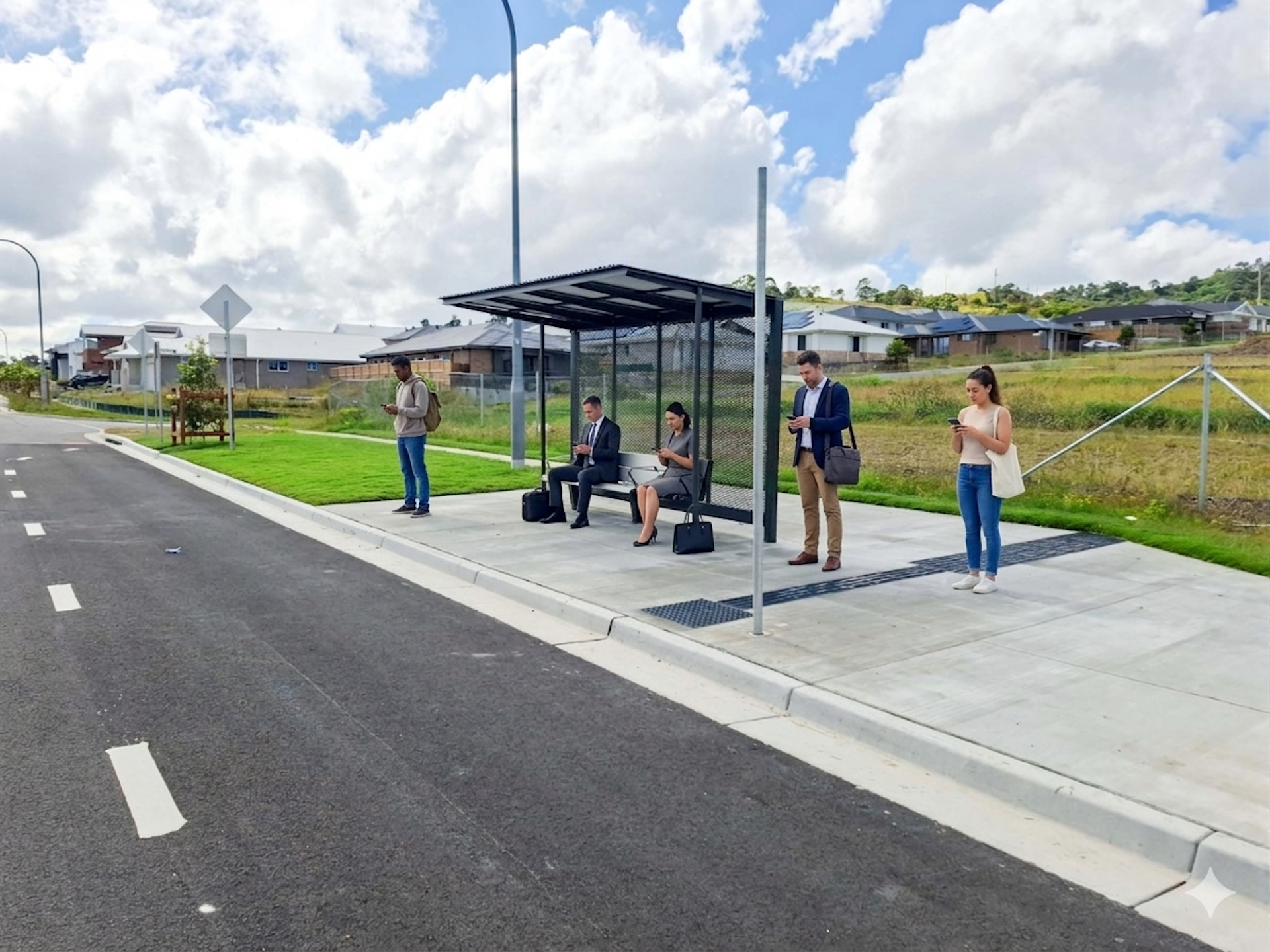
By John Ford, Engineer and Director, ENCAT Australia
Published March 2026 | Last reviewed October 2026
John Ford founded ENCAT Australia in 1989 and has spent more than 35 years designing and manufacturing public safety and civil infrastructure in Wollongong, NSW. He has manufactured bus shelters since 1990 for councils, schools, civil contractors and major infrastructure projects, including Sydney Airport Domestic & International Terminals, Bathurst Regional Council, Central Coast and Newcastle councils, Snowy Mountains councils and many Western NSW councils. This guide reflects his experience across more than a thousand shelter installations.
What councils, schools, architects and contractors need to know before they spend a dollar

Buying a bus shelter sounds straightforward in that you need a structure, it goes on a footpath, and people wait under it, so how complicated can it be?
In practice, it is one of the more deceptively complex procurement decisions a local council officer, school principal, civil contractor, or architect will make. The compliance requirements have changed significantly in recent years and the consequences of getting it wrong, whether that is a DA condition that cannot be signed off, a shelter that fails a council inspection, or a structure that does not meet DDA requirements, will come back to the buyer rather than the manufacturer you purchased from.
This guide is written to give everyone involved in the decision, whether that is a school P&C committee working through its first capital purchase or a procurement officer at a large metropolitan council managing a programme of upgrades, a clear picture of what to look for, what questions to ask, and what the common mistakes are before committing to a supplier.
“A bus shelter that fails a DDA inspection after installation is not just an operational problem, it becomes a budget problem. The cost of replacement always exceeds the cost of getting the specification right before manufacture, not to mention the issue it causes for pedestrian accessibility.”
John Ford, Managing Director, ENCAT
What this guide covers
- DDA compliance requirements and what they mean in practice
- Structural engineering certification and when it is required
- Understanding the total installed cost before you commit
- Programme and delivery and what to ask before you order
- Design, colour, and site fit
- Materials and what actually matters versus what is marketing language
- A practical guide to choosing the right shelter for your site conditions
- Supplier evaluation criteria and red flags to watch for
- Post-installation support and replacement components
- Warranty and what you should expect from any supplier
- Frequently asked questions
1. Why DDA compliance is no longer optional and what it actually means
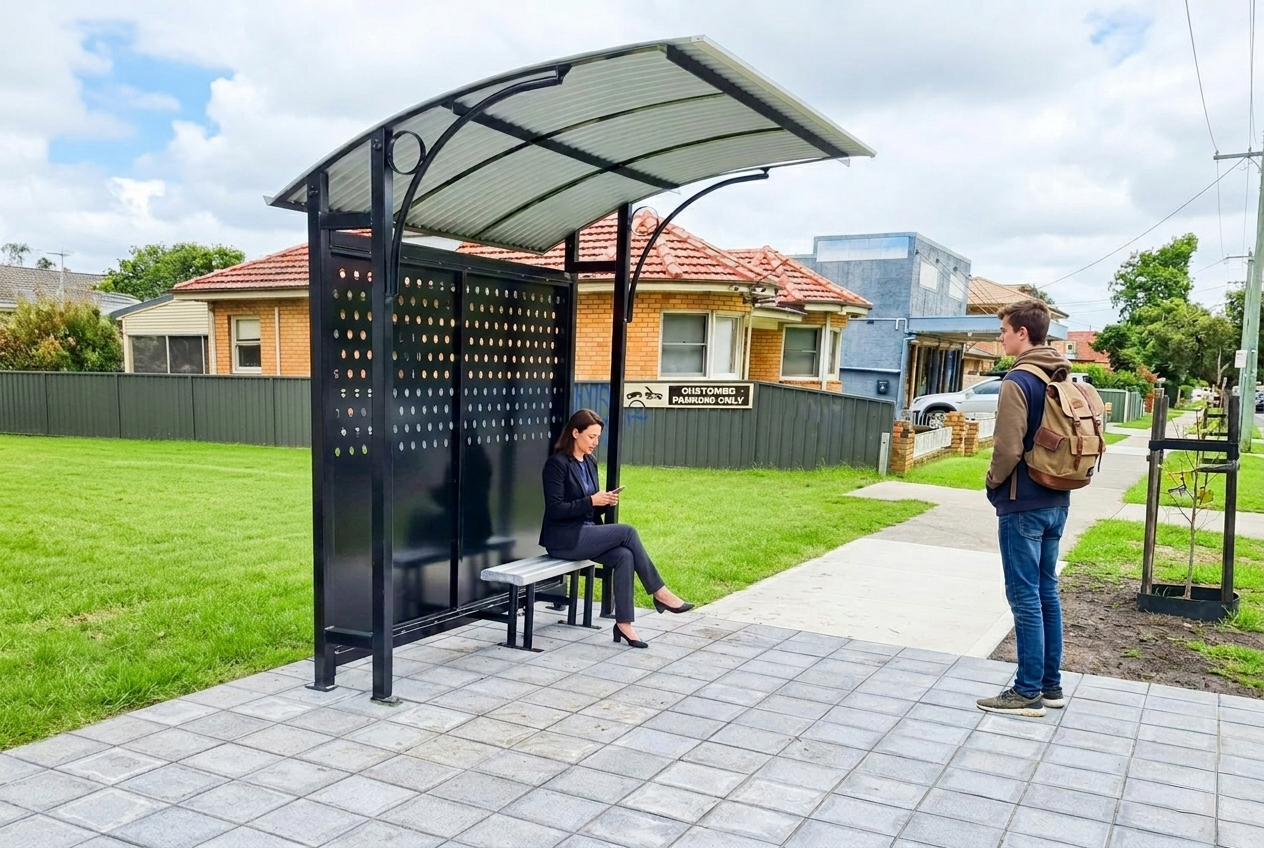
In short: A DDA compliant bus shelter must meet the requirements of the Disability Discrimination Act 1992 and the AS 1428 series of Australian Standards, which govern wheelchair access clearance, seating design, and the approach path to the shelter. The most commonly misunderstood requirement is the seating specification, because a standard bench seat does not meet the standard regardless of how well-built it is.
The Disability Discrimination Act 1992 (DDA) requires that public infrastructure including bus shelters does not discriminate against people with a disability. In practice this means a DDA compliant bus shelter must meet a set of specific physical requirements that govern access, clearance, and seating, most of which are detailed in the AS 1428 series of Australian Standards.
For most of the past decade, DDA compliance was treated by many councils as a consideration rather than a requirement, so it was something that applied to major transit facilities and new developments but could be deferred for routine replacements or rural installations. That position has changed materially.
What NSW councils are now requiring
Across New South Wales and other states, councils are now requiring that all new bus shelter installations meet the Disability Standards for Accessible Public Transport 2002 (DSAPT), the federal instrument enacted under the Disability Discrimination Act 1992. These requirements are increasingly written into DA conditions and council procurement policies. In regional NSW, the NSW Government’s Country Passenger Transport Infrastructure Grants Scheme (CPTIGS) specifically prioritises grant funding for accessible shelter upgrades, including tactile ground surface indicators, levelled boarding areas, and compliant clearance widths.
- Country Passenger Transport Infrastructure Grants Scheme (CPTIGS), NSW Government. An active NSW Government grant programme that funds bus stop and shelter upgrades across regional NSW, explicitly prioritising safety and accessibility improvements. It funds TGSIs, levelled boarding areas, accessible paths, and new shelters.
- Disability Standards for Accessible Public Transport 2002 (DSAPT), Federal. The legislative instrument under the DDA that all NSW councils and transport providers are legally required to comply with for bus stops and shelters. It is referenced in council policies, DA conditions, and TfNSW design guidelines as the compliance baseline.
What DDA compliance actually requires in a bus shelter
There is a significant amount of confusion in the market about what DDA compliance means for a bus shelter specifically. In practical terms it requires the following:
- Wheelchair access clearance and manoeuvrability space within the shelter footprint
- Seating with a backrest and armrests, because a flat bench seat does not meet the standard
- A clear approach path to the shelter without obstructions
- Tactile ground surface indicators (TGSIs) at stops where required by the authority
The seating point is the one that most often catches buyers out. A bench seat, which is the most common configuration in older shelters, is not DDA compliant. A DDA compliant seat has a back and armrests, which allows a person with a mobility impairment to lower and raise themselves without assistance, and if your project requires a DDA compliant shelter and you specify bench seating, the shelter will not pass inspection.
Some manufacturers market shelters based on whether they accommodate one or two wheelchair spaces simultaneously. While double wheelchair access is achievable in larger shelter configurations, the minimum DDA requirement is a single accessible space with adequate clearance, and for councils with constrained footpaths or tight budgets a shelter that meets the minimum DDA standard in a compact footprint is often the most practical and cost-effective solution. The Sirius Slimline is one of the smallest DDA compliant shelters available in Australia and is directly relevant for councils where site width is the limiting factor.
Who is responsible for DDA compliance?
The short answer is that the buyer is responsible. If a council or developer specifies a shelter that does not meet DDA requirements and approves the installation, the liability rests with the party who commissioned the works. The manufacturer’s responsibility extends to building what is specified but the specification itself is the buyer’s document, which is why it is essential to confirm DDA compliance explicitly with the manufacturer before ordering and to have that confirmation in writing. ENCAT provides this written confirmation as a standard part of every project.
2. Structural engineering certification is the requirement most buyers discover too late
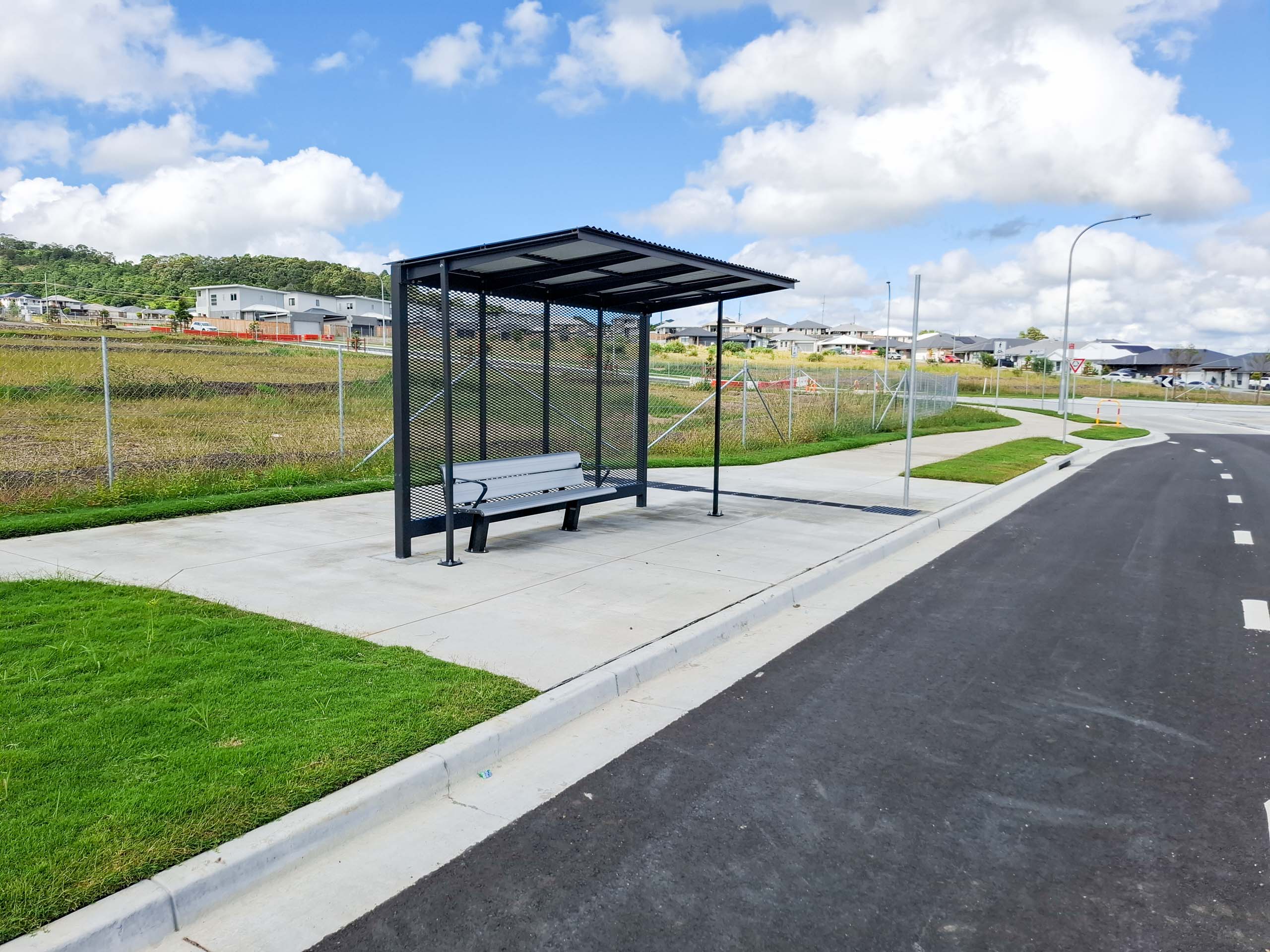
In short: Every bus shelter installed on public land in Australia should carry an engineering certificate demonstrating compliance with AS4100 (Steel Structures) and AS1170 (Wind Loading). Without that certification the shelter may not be approved through a DA process at most NSW councils, and this is a requirement that most buyers only discover after they have already committed to a supplier.
Structural engineering certification is increasingly required for bus shelter installations in council and government procurement processes. For many buyers, particularly school principals and first-time infrastructure procurement officers, this requirement only becomes visible when the DA is lodged or the tender documents are reviewed, at which point the shelter has often already been specified or ordered.
What structural certification means
A structurally certified bus shelter has been assessed by a licensed structural engineer and confirmed to meet the loading requirements applicable to its installation conditions. For bus shelters in Australia, the two key standards are AS4100, which is the structural design standard for steel elements including columns, beams, and connections, and AS1170, which is the wind loading standard that determines the forces the shelter must resist based on its geographic location and exposure classification. The engineering certificate documents that the shelter has been designed to meet these standards and that the specific installation including the shelter model, the fixing method, the substrate, and the site location has been considered in the assessment.
Why it matters for your project
Council procurement processes for capital infrastructure increasingly require engineering certification as part of the submission, and without it a shelter cannot be approved through a DA or building permit process at many councils. For major infrastructure projects at airports, transit interchanges, or government facilities, engineering certification is non-negotiable and is typically specified in the principal contractor’s procurement requirements.
The practical problem is that many bus shelter suppliers manufacture standard catalogue products that have not been structurally certified, or offer certification only as an optional extra at additional cost. Buyers who discover this after committing to a supplier face either an additional cost they had not budgeted for, or the need to engage an independent structural engineer at their own expense. ENCAT can make engineering certification to AS4100 and AS1170 available for its shelters, and the certification and documentation your project needs is discussed and agreed when the scope of works is being worked out.
“When requesting a quote from a bus shelter supplier, always ask: is structural engineering certification to AS4100 and AS1170 included as standard or is it an additional cost, and will the documentation be provided as part of the project deliverables?”
John Ford, Managing Director, ENCAT
Council-issued drawings and DA conditions
A specific and common scenario deserves particular attention, which is the shelter required as a condition of a Development Approval where council has issued its own drawings and specifications. In this situation the shelter is not a catalogue product but a manufactured-to-specification item, and the buyer is responsible for ensuring the manufacturer can execute the issued documentation exactly. This requires a manufacturer with both the technical capability to interpret engineering drawings and the fabrication precision to produce components that match the specification. CNC tube laser cutting, which produces components to sub-millimetre tolerances from a digital file, is the fabrication method that makes this reliably achievable, and manufacturers who rely on manual or saw-cutting methods introduce dimensional variation that can cause components to deviate from the issued drawings.
3. Understanding the total installed cost and why the quoted price is rarely the full picture
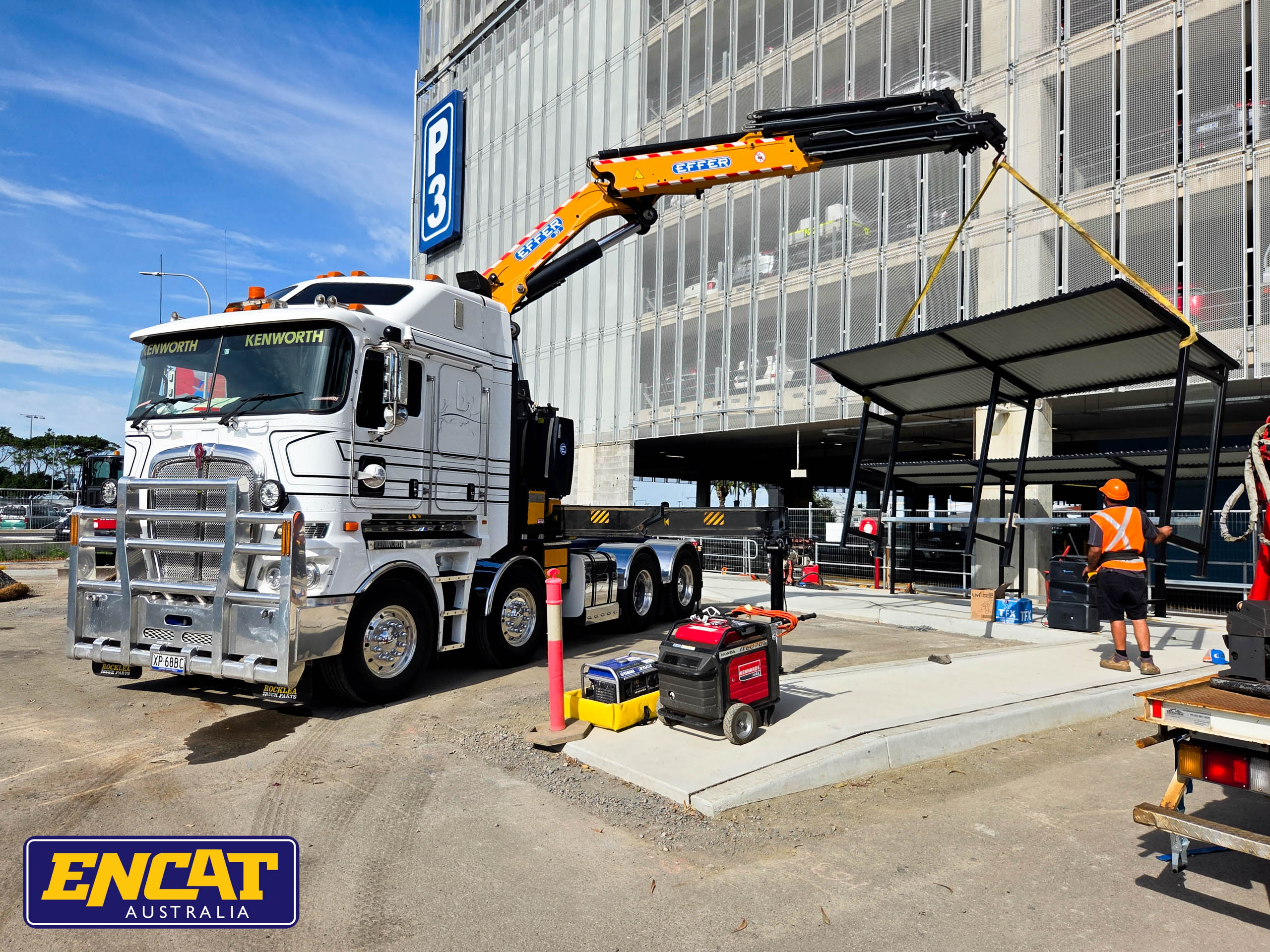
In short: The supply price of a bus shelter is only part of the total installed cost. The additional items including transport, crane hire, concrete slab preparation, chemset anchor installation, and traffic management can add 30 to 100% to the base shelter cost depending on site conditions, and these items are not included in a supply-only quote from any manufacturer.
The single most common source of frustration among buyers who have been through a bus shelter procurement before is the gap between the quoted price and the total cost of installation. A supply-only quote from a manufacturer does not include transport, crane hire, concrete preparation, traffic management, or electrical connection for lighting, and each of these can add meaningful cost to a project and, if not budgeted for in advance, can create a significant overrun.
What to confirm before accepting a quote
When reviewing a quote from any bus shelter supplier, the following items should be explicitly confirmed as either included, excluded, or provided by the buyer:
Item | What to confirm |
|---|---|
Manufacture and powder coating | Should always be included in the base quote |
Transport to site | Is it the supplier’s own vehicle or third-party freight? Who is responsible for transit damage? |
Crane hire | Is a crane required? Who provides it and who pays? |
Concrete slab preparation | Is a slab required? What specification? Who prepares it? |
Chemset anchor installation | Is this included in the supply-and-install quote? |
Traffic management | Required at some sites. Confirm whether your council requires a Traffic Management Plan and who prepares it. |
Lighting conduit and provisions | If lighting is required, are conduit and mounting provisions installed during manufacture? |
Engineering certification documentation | Is this included and in what format? |
DDA compliance confirmation | Is written confirmation provided as part of the project deliverables? |
The advantage of using a manufacturer who handles the complete scope including manufacture, transport, installation, and documentation is that the total installed cost is known before commitment and there is a single point of accountability if anything does not go to plan. Coordinating multiple subcontractors for a single shelter installation is rarely efficient and introduces programme risk at every handoff.
The hidden cost of vandalism and maintenance
A lower purchase price can represent significantly higher total ownership cost if the shelter requires ongoing maintenance, component replacement, or vandalism repair over its service life, and this is particularly relevant for councils managing large shelter portfolios where the cumulative maintenance cost across a fleet of shelters is a meaningful budget line.
The design choices that determine vandalism resistance are worth examining before purchase. Glass side panels are the most commonly vandalised element of a bus shelter and have been known to be smashed within the first days or weeks of installation in high-risk locations. Shelters with exposed fixings, projecting elements, or components that can be removed with standard tools are consistently more vulnerable than shelters with a clean, minimised profile.
A shelter with a documented service history across a large installed base and zero vandalism incidents over that history provides a level of evidence about real-world performance that no product specification or warranty document can match. ENCAT’s Sirius steel shelter has recorded zero structural vandalism damage incidents across its installed base over 30 years of service. This includes severe storms.
4. Programme and delivery and what a late shelter actually costs

For a civil contractor, a DA-driven development, or a school trying to have infrastructure in place by the start of term, the delivery date of a bus shelter is not an administrative detail but a programme constraint with downstream consequences.
The scenarios where a late shelter becomes expensive
- Civil contractors with tied completion dates: a civil contractor whose practical completion is contingent on a DA condition that requires an installed, compliant shelter will face potential liquidated damages exposure for every day of delay past the target date.
- Grant-funded council programmes: a council infrastructure programme funded by a grant with a tied acquittal deadline may have funding clawed back if the shelter is not installed and signed off before the deadline.
- Schools with fixed term start dates: a school with a fixed term start date and a P&C committee that has communicated the installation to parents faces a reputational and operational problem if delivery slips.
- Developers waiting on practical completion: a developer whose practical completion certificate cannot be issued until all DA conditions including the shelter are satisfied will have their entire programme held up by a single undelivered item.
What reliable delivery actually requires from a supplier
Programme certainty from a bus shelter supplier is a function of manufacturing discipline rather than promises. A supplier who manufactures in-house, controls their own production schedule, transports using their own vehicles, and installs with their own team has far fewer variables than a supplier who sources components externally, uses third-party freight, and subcontracts installation.
The questions to ask any supplier before committing include what the standard lead time is from confirmed order to delivery, whether that lead time is guaranteed or indicative, whether transport is by the supplier’s own vehicle or third-party freight, whether installation is managed in-house or subcontracted, and who the single point of contact is from order through to installation sign-off.
ENCAT’s standard lead time from confirmed order to delivery on site is 4 weeks for standard models and 8 weeks for custom shelters.
Fully assembled delivery versus flat-pack
Some suppliers deliver shelters in component form for on-site assembly. While this reduces transport cost, it introduces on-site assembly time, the risk of component damage or loss during transport, and the possibility of incorrect assembly. For a simple roadside shelter that needs to be installed quickly with minimal site presence, particularly in a rural location, on a busy road, or at a school, fully assembled delivery followed by crane placement is consistently more efficient and lowers the total cost of installation.
5. Design, colour, and fit and making the shelter suit its environment

A bus shelter is permanent public infrastructure. Unlike a temporary structure, it will be visible in its location for a minimum of 20 to 30 years, and the visual impact on the surrounding streetscape, neighbourhood character, and community environment is a legitimate procurement consideration, and one that council officers, architects, and developers are increasingly expected to address as part of the approval process.
The questions buyers should be asking about design
- Does the shelter’s profile and proportion complement or contrast with the surrounding built environment?
- Is the colour palette appropriate for the location, whether urban, rural, heritage, coastal, or bushland?
- Does the shelter meet any local heritage or character area design guidelines?
- Will residents and the community accept the design, and has the council’s design review process been satisfied?
These are not aesthetic indulgences. A shelter that draws community objection after installation creates council relations problems that are disproportionate to the cost of the asset, and getting the design right at the specification stage including colour, profile, and material finish is significantly less expensive than retrospective modification.
Custom colour and what it actually means
Most bus shelter manufacturers offer a standard powder coat colour range and an optional custom colour service, and in practice the distinction matters. A supplier who subcontracts powder coating to a third-party finisher has limited control over colour accuracy, film thickness consistency, and the quality of the primer coat underneath, and all of these factors affect both the appearance and the longevity of the finish.
A supplier with an in-house powder coating facility can apply both a zinc-rich primer base coat and a colour topcoat under controlled conditions, with consistent film thickness across the entire shelter. The zinc primer coat is the corrosion protection layer that continues to protect the substrate even if the topcoat is scratched or damaged over time, and without a primer base coat a damaged topcoat allows moisture to reach bare steel, which accelerates corrosion significantly.
Matching the environment for modern, rural, and heritage applications
Rural and regional councils face a design challenge that is different from metropolitan applications. A shelter in a country town’s main street, a national park entry, or a farming road pull-over area should sit respectfully within its landscape rather than standing out as an incongruous piece of urban infrastructure, and the ability to specify a custom colour matched to natural environment tones including the ochres, greens, and greys of the Australian bush is a practical capability that separates manufacturers who offer genuine custom colour from those who offer a standard range with a few nature-inspired names. Ask your supplier whether they can match a specific RAL or Colorbond colour, provide a physical sample before manufacture, and guarantee colour consistency between units on a multi-shelter order.
See ENCAT’s powder coating colour options.
6. What actually matters in materials, and what is marketing language
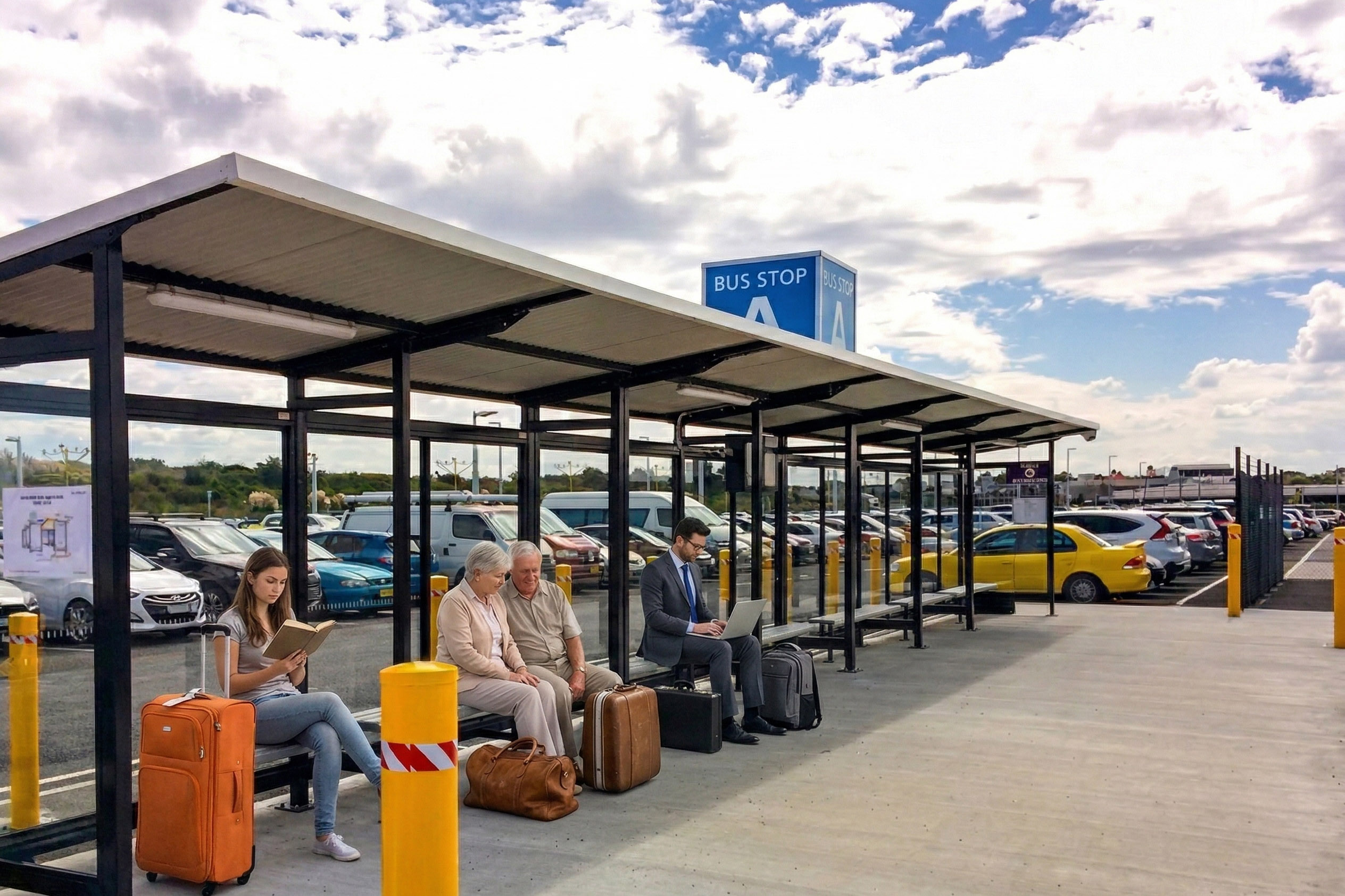
Every bus shelter manufacturer in Australia leads with materials in their marketing, with lists of galvanised steel, powder-coated aluminium, stainless steel, toughened glass, and Colorbond roofing that are long and largely interchangeable between suppliers. The following is a straightforward assessment of what actually matters versus what is standard-issue marketing language.
Steel versus aluminium
Both materials are used in quality bus shelters. Steel is stronger and more resistant to physical impact, which is relevant for locations exposed to vehicle proximity or deliberate physical abuse, and aluminium is lighter, naturally corrosion-resistant, and preferred for seating and architectural elements where a refined finish is required. Many quality shelters use steel for structural frames and aluminium for seating and panel elements, which combines the structural properties of steel with the finish quality and weight advantages of aluminium. ENCAT supplies in galvanised steel, powder-coated aluminium, and stainless steel depending on the application and site conditions.
Glass panels and the decision that matters most for long-term performance
Glass bus shelter panels are aesthetically appealing and are increasingly requested by architects and urban designers who want a contemporary, transparent streetscape aesthetic, but the practical reality is different. Toughened laminate glass to the Australian Standards for bus shelter applications is the appropriate specification, and even correctly specified glass panels are consistently the most vulnerable element of a shelter in any location with elevated vandalism risk.
The decision to specify glass or mesh side panels should be made with an honest assessment of the location. A glass shelter in a low-traffic, low-risk residential area may perform well, but the same shelter at a busy suburban arterial road, a school, or any location with a history of vandalism is a maintenance liability from day one. The most responsible guidance a manufacturer can give a buyer is to recommend mesh or steel panel options for higher-risk locations, even when the buyer’s initial preference is glass.
Roof material: Colorbond versus polycarbonate
Colorbond Custom Orb roofing is the standard specification for most steel bus shelters in Australia as it is robust, UV-stable, available in the full Colorbond colour range, and can be formed to profile shapes that direct rainwater away from the shelter interior without requiring guttering. Polycarbonate roofing, sometimes referred to as Perspex or by the trade name Alupanel depending on the supplier, is specified where natural light transmission is desired as it allows a lighter, more open appearance, but it degrades over time under UV exposure and becomes yellowed and brittle after prolonged outdoor use. For permanent infrastructure expected to perform for 20 to 30 years, Colorbond is the more durable and lower-maintenance specification.
What to look for in a corrosion protection specification
The coating system applied to a steel shelter is more important than the raw material specification for long-term performance. A two-coat system using a zinc-rich primer applied to the prepared steel substrate followed by a powder coat colour topcoat provides corrosion protection at two levels. The zinc primer acts as a sacrificial barrier, meaning that even if the colour topcoat is damaged the primer continues to protect the steel underneath, and a single-coat finish with no primer provides no protection once the topcoat is breached. Always ask your supplier whether a primer coat is included as standard or available only as an option.
7. A practical guide for choosing the right shelter for your site
With the compliance, quality, and delivery considerations established, the final decision is which shelter configuration suits the specific site. The following framework is designed to help buyers move from site conditions to product specification without needing to understand every technical detail.
Your site condition | The right starting point |
|---|---|
Narrow footpath with less than 600mm available depth | Slimline single shelter, the smallest DDA compliant option available |
Standard suburban footpath or verge | Single shelter, the most widely specified configuration in NSW |
Wider site or higher passenger volume | Double shelter with two bays under a shared roof |
High-traffic stop, interchange, or prestige application | Squire or equivalent with a larger structure and glass end panels available |
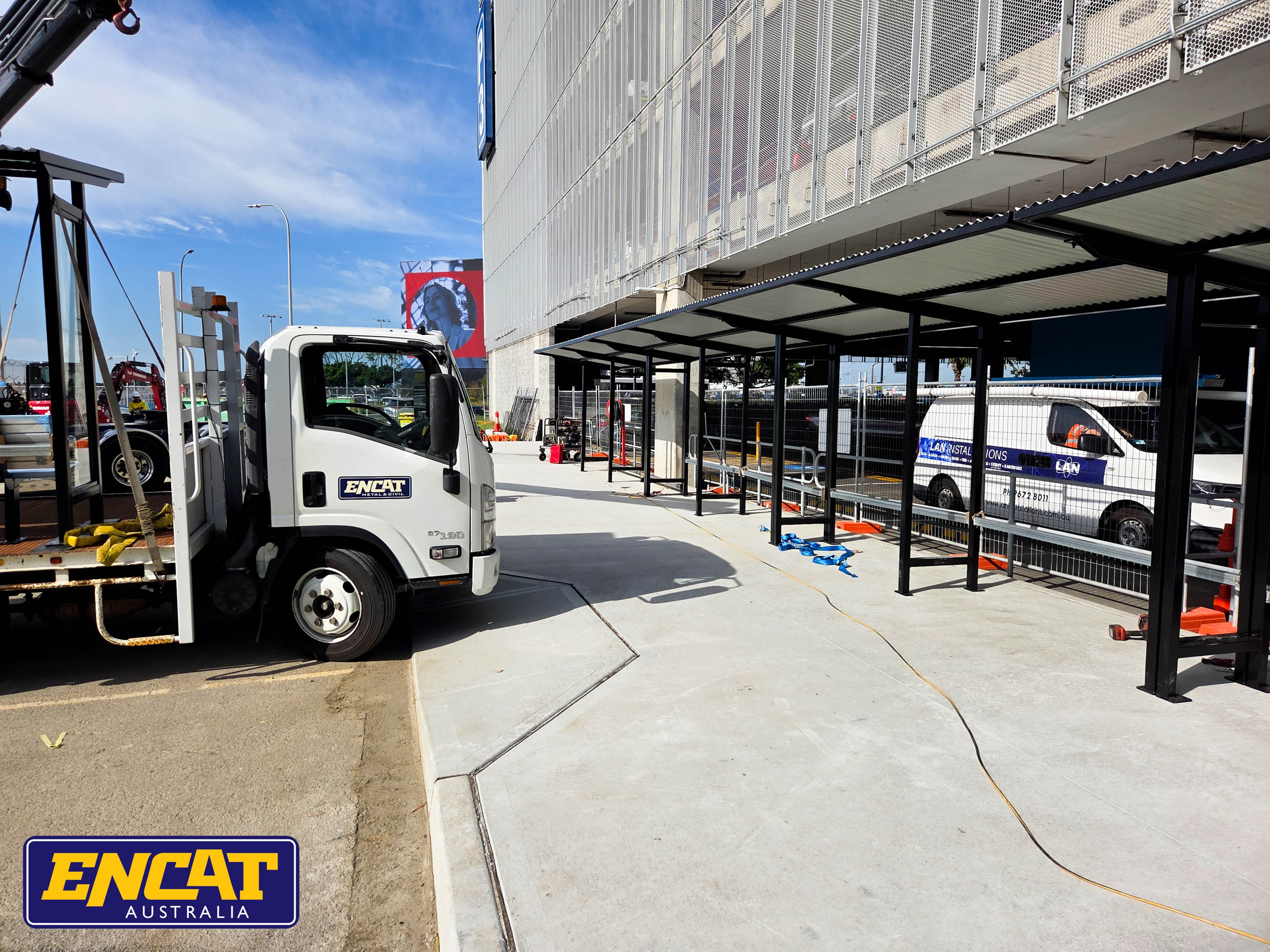
Multiple bays required as a continuous facility | Modular configuration scalable in 2.4m increments, used at airports and major interchanges |
Council-issued DA drawings | Contact the manufacturer directly, as specification-to-drawing manufacture requires CNC capability and engineering review |
Rural or remote location | Any Sirius configuration. Confirm transport method as fully assembled delivery is preferred, and ask about custom colour matching |
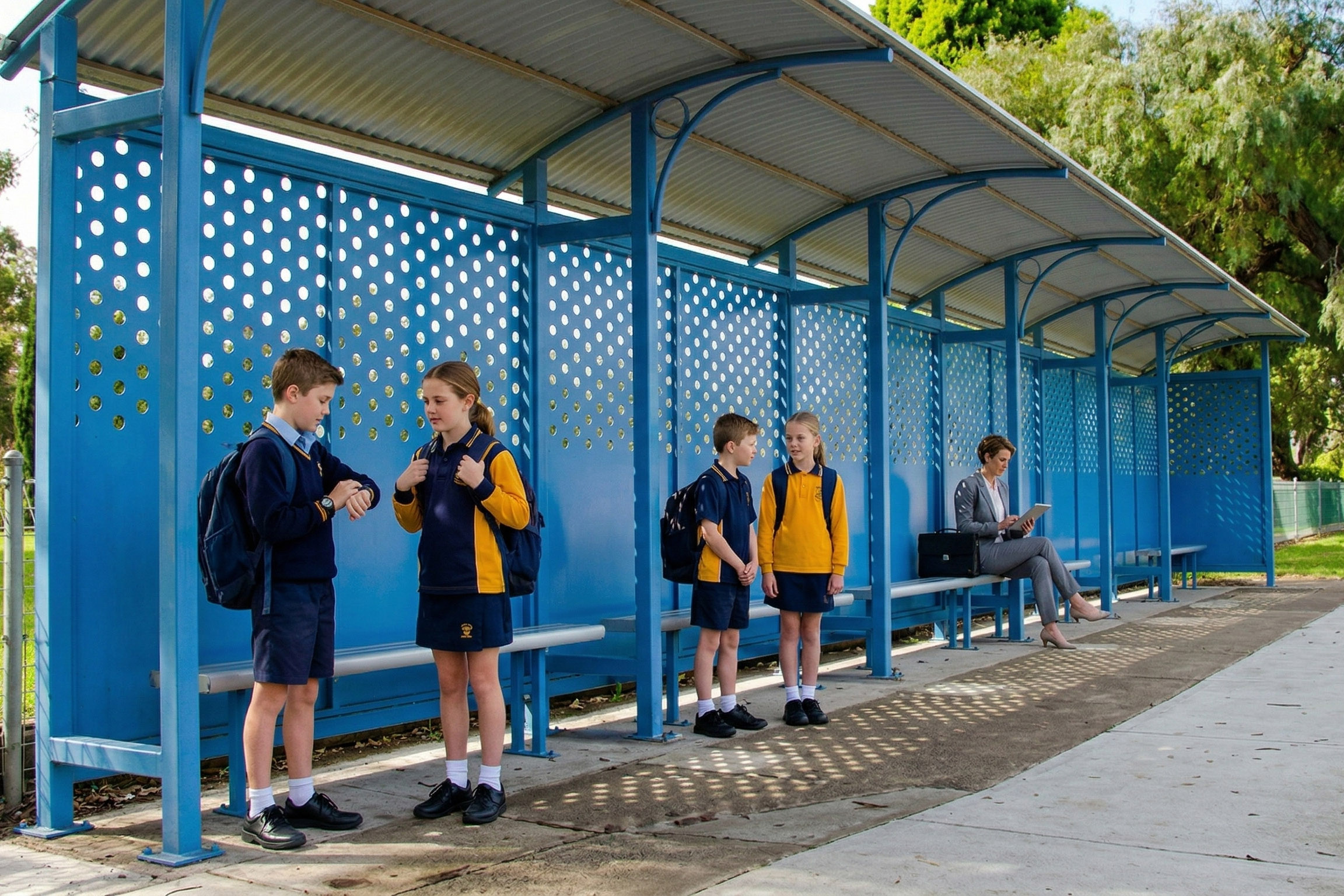
School bus stop | Single or slimline. Confirm DDA compliance, installation time, and whether out-of-hours installation is available |
Questions to ask before you finalise the specification
- Is this shelter DDA compliant as standard, and can you confirm that in writing?
- Is structural engineering certification to AS4100 and AS1170 included, and will you provide the documentation?
- Can you manufacture to council’s issued drawings if required?
- What is the lead time from confirmed order to delivery on site?
- Is transport by your own vehicle, and is the shelter delivered fully assembled?
- Is installation included, and who manages the crane and chemset anchoring?
- What are the seating options, and which is DDA compliant?
- Can you provide a custom colour, and do you have an in-house powder coating facility?
- What corrosion protection system is used and is there a primer coat under the colour topcoat?
- What is your warranty, and what does it cover?
- Do you supply replacement components and carry out on-site repairs after installation?
8. What to look for in a supplier and the red flags that should concern you
The characteristics of a reliable bus shelter supplier
- In-house manufacture: everything from cutting to coating is done under one roof. No subcontractors means no handoffs, no communication failures, and full accountability.
- Engineering certification as standard: not as an optional extra and not available only on selected models. Every shelter should be certifiable to AS4100 and AS1170.
- DDA compliance by design: not retrofitted. A supplier who adds a DDA compliant seat as an upgrade option does not fully understand the standard.
- A documented installation history: not a catalogue of products. Ask for references, case studies, and examples of completed installations in similar applications to yours.
- A committed delivery date: not an estimate. A supplier who has confidence in their manufacturing and logistics process will commit to a date in writing.
- A single point of contact: from quote through to installation sign-off. If you have to call different people for different parts of the process, the risk of something falling through the gaps increases significantly.
Red flags that should prompt further questions
- The supplier cannot confirm DDA compliance until they know the exact configuration. Basic DDA compliance should be a property of the shelter design, not a configuration-dependent outcome.
- Engineering certification is described as available on request rather than provided as standard.
- Specifications list “varies based on application” for dimensions, weight, and materials, which means the supplier does not have a fixed product and is quoting without a confirmed design.
- The quote does not clearly itemise what is included and excluded in the supply and installation scope.
- The supplier cannot provide a specific delivery date and can only give a lead time range.
- There are no completed project references, case studies, or documented installation history.
- The manufacturer does not carry stock in Australia or is importing from overseas, which affects lead times, parts availability, and the ability to service or repair the shelter after installation.
9. After the shelter is installed and what ongoing support you should expect

A bus shelter is not a consumable. It is a permanent public asset that will be in service for two to three decades and will require occasional maintenance, component replacement, or repair over that period, and the supplier relationship does not end at installation.
Replacement components and repair
Vehicle strikes are the most common cause of shelter damage after installation. A car or truck that clips a shelter post, a delivery vehicle that backs into a panel, or a collision at a roadside stop can damage individual components without requiring full replacement of the shelter, and a manufacturer who produces shelters in-house from digital files can reproduce replacement components to the original specification so that the post is the same diameter, the panel is the same profile, and the fixing is the same pattern.
ENCAT supplies replacement components to councils and project owners when shelters are damaged and carries out on-site repairs as required. We recently supplied Wollongong council a new bus shelter back section after a vehicle accident. The lead time was 3 weeks.
A supplier who imports shelters from overseas, or who has discontinued the product line, cannot offer this service, and when evaluating a supplier you should ask explicitly whether a component damaged five years after installation can be supplied as a replacement part, at what lead time, and at what cost.
DDA compliance over time
The DDA requirements applicable to bus shelters may evolve over time as the Australian Standards are revised, and a shelter that is DDA compliant at the time of installation may require modification to meet updated requirements in the future such as a change to the required seating specification or tactile indicator requirements. A domestic manufacturer with a long-standing product range can typically retrofit or modify existing shelters to meet updated requirements, whereas an imported product may have no local support pathway.
Seating replacement
Seating is the element of a bus shelter most likely to require replacement during the shelter’s service life through wear, vandalism, or changes to DDA seating requirements. If your installed shelter has a DDA compliant seat with back and armrests fabricated in anodised aluminium, you should confirm that the manufacturer can supply replacement seating to the same specification and that it can be retrofitted to the existing shelter structure without modification.
10. Warranty and what you should expect from any supplier
A bus shelter manufactured to the standards covered in this guide should be supported by a manufacturer’s warranty covering both structural integrity and coating performance, and these are two separate things that should be confirmed separately with any supplier before you commit. ENCAT provides a 10 year structural warranty and a 1 year coating warranty on all shelters.
Warranty subject to environmental suitability for materials selected.
When reviewing any bus shelter warranty, the key questions to ask are what the warranty specifically covers and what it excludes, whether a warranty claim requires the shelter to be returned to the factory or can be resolved on site, whether the warranty is transferable if ownership of the site changes (which is relevant for developers who sell completed projects), and what the process is for lodging a claim including what documentation is required.
A warranty from a domestic manufacturer who has been operating for 35 years and who maintains their own workshop and installation team is meaningfully more valuable than a warranty from a supplier who imports product, because the domestic manufacturer has both the capability and the commercial incentive to honour it. When a shelter needs repair under warranty, the manufacturer who built it from digital files can reproduce any component exactly, whereas a supplier who imports their product may have no ability to procure matching replacement parts.
Frequently asked questions about buying a bus shelter in Australia
What is a DDA compliant bus shelter?
A DDA compliant bus shelter meets the requirements of the Disability Discrimination Act 1992 and the AS 1428 series of Australian Standards. It must include a clear wheelchair access space within the shelter footprint, a seat with a backrest and armrests (a flat bench seat does not comply), and an unobstructed approach path to the shelter entrance. At stops where required by the relevant transport authority, tactile ground surface indicators must also be installed.
Do bus shelters need structural engineering certification in Australia?
Yes, increasingly. Council procurement processes and DA applications for bus shelter installations in NSW and other states now commonly require an engineering certificate demonstrating compliance with AS4100 (Steel Structures) and AS1170 (Wind Loading). Without this, a shelter may not be approved through the DA process at most NSW councils. For major projects at airports or government facilities, structural certification is non-negotiable and is typically required by the principal contractor.
How much does a bus shelter cost to install in Australia?
The supply price of a bus shelter is only part of the total installed cost. Transport, crane hire, concrete slab preparation, chemset anchor installation, and traffic management are typically additional items that are not included in a supply-only quote. The total installed cost depends significantly on site conditions, location, and whether the shelter is a standard catalogue model or a custom-specified item manufactured to council drawings. Single shelters are approximately $6,000 and a double shelter $9,000 (2026).
What is the smallest DDA compliant bus shelter available?
The ENCAT Sirius Slimline is one of the most compact DDA compliant bus shelters available in Australia, designed for sites where footpath depth is the limiting constraint. It meets the full DDA requirements including the compliant seating specification with backrest and armrests, in a footprint suited to sites where a standard-width shelter would not fit.
How long does a steel bus shelter last?
A quality steel bus shelter with a two-coat corrosion protection system using a zinc-rich primer plus a powder coat colour topcoat is designed for a service life of 20 to 30 years. The two-coat system continues to protect the steel substrate even if the colour topcoat is scratched or damaged, because the zinc primer acts as a sacrificial barrier. Single-coat finishes with no primer provide no protection once the topcoat is breached.
Can a bus shelter be installed at a school?
Yes, and schools are among the most common applications for bus shelter installations in NSW. The key considerations for school installations are DDA compliance for the seating and footpath access, installation timing which should be scheduled outside school hours or during school holidays to avoid site access conflicts, and site access for the delivery vehicle and crane. A manufacturer who transports fully assembled shelters on their own vehicle and installs with their own team can typically commit to a specific installation date and minimise the on-site time required.
What questions should I ask a bus shelter supplier before ordering?
The key questions to ask any bus shelter supplier before committing are: whether the shelter is DDA compliant as standard and whether that can be confirmed in writing; whether structural engineering certification to AS4100 and AS1170 is included as standard or is an additional cost; what the lead time is from confirmed order to delivery on site and whether that is guaranteed; whether transport is by the supplier's own vehicle and the shelter is delivered fully assembled; whether installation is included and who manages the crane and chemset anchoring; whether a primer coat is included under the colour topcoat; and what the warranty covers and how a claim is lodged.
What happens if a bus shelter is damaged by a vehicle after installation?
Vehicle strikes are the most common cause of bus shelter damage after installation. A domestic manufacturer who produces shelters in-house from digital files can supply replacement components to the exact original specification, so that the replacement post, panel, or fixing matches the installed shelter. A supplier who imports their product, or who has discontinued the product line, may not be able to provide matching replacement parts. When evaluating a supplier, ask explicitly whether they supply replacement components, whether they carry out on-site repairs, and what the lead time and cost for replacement parts would be.
Does my bus shelter need to match local heritage or character area guidelines?
In some council areas, yes. Many councils now have heritage or character area design guidelines that apply to street furniture and public infrastructure, and a bus shelter installed in a heritage streetscape or a designated character area may require council design review approval before installation. Check with your council whether design guidelines apply to the installation location, and confirm with your manufacturer whether they can provide custom colour matching, alternative profiles, or heritage-appropriate finishes to meet those requirements.
About ENCAT
ENCAT has designed, manufactured, and installed bus shelters from its Wollongong, NSW factory since 1990. Every shelter is cut, fabricated, primed and powder coated in-house, delivered fully assembled on ENCAT’s own vehicles, and installed by ENCAT’s own team, with DDA compliance confirmed in writing on every project.
The range includes the Sirius Slimline, Sirius Single, Sirius Double, Sirius Modular, Squire and Kingsford Glass shelters, plus custom shelters manufactured to council-issued drawings. See the full bus shelter range or contact ENCAT to discuss your project.
This guide references the Disability Discrimination Act 1992, the Disability Standards for Accessible Public Transport 2002, the AS 1428 series, AS4100 and AS1170. Specifiers should refer to the current versions of these standards and to their council’s requirements for the most up-to-date compliance obligations.


