
By John Ford, Engineer and Director, ENCAT Australia
Published October 2026 | Last reviewed October 2026
John Ford founded ENCAT Australia in 1989 and has spent more than 35 years designing and manufacturing public safety and civil infrastructure in Wollongong, NSW. He has manufactured RMS-compliant pedestrian fencing to the Transport for NSW R0800 standard drawings since they were first published, supplying Transport for NSW, councils across NSW, Victoria, Western Australia, South Australia and Queensland, and infrastructure projects throughout Australia. John is not a commentator on road safety. He is a manufacturer who has watched the consequences of bad specification decisions end up on roads across the country.
Austroads has confirmed the gaps in pedestrian planning guidance
In short: Austroads' Strategic Review of Pedestrian Planning Guidance (AP-R749-26), published in January 2026, confirms that pedestrian planning guidance across Australia and New Zealand has gaps and that practitioners need better tools.
Austroads published its Strategic Review of Pedestrian Planning Guidance (AP-R749-26) in January 2026. It is a measured document, as Austroads publications tend to be. But what it says, in the careful language of a peak road authority body, is that pedestrian planning guidance across Australia and New Zealand has gaps. That practitioners and agencies need better tools. That the evidence base needs strengthening. That the way we currently plan for pedestrians is not good enough.
I have been manufacturing compliant pedestrian fencing for 35 years. I did not need a report to tell me that.
What I want to talk about is what those gaps look like on the ground, why the wrong decisions keep getting made, and what the people responsible for specifying and approving pedestrian infrastructure need to understand before the next project goes out to tender.
The problem is not ignorance. It is prioritisation.
In short: Engineers and planners know Safe System principles. Pedestrian safety keeps being traded away under cost and programme pressure, which makes this a decision-making problem, not a knowledge or funding problem.
The engineers and planners working on road projects in Australia understand Safe System principles. They know the framework. They can recite the hierarchy of controls. The problem is not that they do not know what the standard demands. The problem is that pedestrian safety consistently gets traded away under project cost and programme pressure, and the consequences of that trade-off are deferred far enough into the future that no one in the room when the decision is made is ever held accountable for it.
AP-R749-26 is part of Austroads’ broader Keeping People Safe When Walking research programme, which exists specifically because pedestrian deaths and serious injuries in urban environments remain unacceptably high despite decades of Safe System policy. Austroads has described this as a long-term research programme aimed at strengthening the evidence used to address pedestrian deaths and serious injuries across Australia and New Zealand. The programme is ongoing precisely because the problem has not been solved. Infrastructure is still being designed and built that leaves pedestrian risk inadequately controlled.
That is not a funding problem or a knowledge problem. It is a decision-making problem.
What does the Safe System actually demand and what gets delivered instead?

In short: Safe System assumes people will make mistakes, so the built environment must stop those mistakes from causing death or serious injury. Signage and line marking on their own are not Safe System design.
Safe System is built on one core premise: human error is inevitable, and the built environment must be designed to ensure that when errors occur, they do not result in death or serious injury. In a pedestrian context, this means accepting that people will make mistakes. They will misjudge gaps, cross at uncontrolled locations, and move unpredictably near traffic. The infrastructure must account for that, not assume it away.
Road designers and system operators are encouraged to apply Safe System guidance when designing new or redesigning existing roads and streets, and when making decisions about treatments for vulnerable road users. The guidance is explicit that physical design solutions, not behavioural measures, are the primary mechanism for managing risk.
In practice, what gets delivered on a large number of projects is signage, line marking, and an assumption that pedestrians will use the designated crossing. That is not Safe System design. That is wishful thinking with a coat of paint on it.
Signage does not work at 2am. It does not work for an eight-year-old crossing near a school. It does not work at a busy shopping centre where the car park is on the wrong side of a four-lane road and the designated crossing is 80 metres away. In all of those environments, the pedestrian desire line will override the signage every time. That is not a behavioural failure. That is a design failure.
Why does pedestrian fencing keep appearing in road safety audits?

In short: Physical separation between pedestrians and vehicles is a primary safety control. Fencing identified in a road safety audit is too often value-engineered out of the scope, or swapped for a non-compliant product after contract award.
Austroads’ Keeping People Safe When Walking programme includes streams focused on strengthening key practitioner guidance and methodologies, as well as economic assessment of safer speeds. Both streams point toward the same conclusion: physical separation between pedestrians and vehicles, in environments where they would otherwise interact unpredictably, is a primary safety control. Not a secondary one. Not a last resort after everything else has failed.
Technical Direction RTD 2019/001 from Transport for NSW uses the language of “last resort” when discussing pedestrian fencing. I understand the intent. It is warning designers not to reach for fencing as a first response when a better crossing facility would solve the problem. That is a legitimate concern. Poorly located fencing that forces pedestrians into longer routes creates its own risk.
But “last resort” gets misread by procurement officers and project managers as “only use if there is no other option.” The result is that projects go through with fencing identified in the safety audit as a required treatment, and it gets value-engineered out of the scope to save money. Or it gets specified and then substituted with a non-compliant product during procurement because nobody checked the certification documents carefully enough.
Both outcomes put people in danger. The difference is that the first gets debated in a project meeting and the second happens quietly after contract award.
The specification decision is where lives are determined
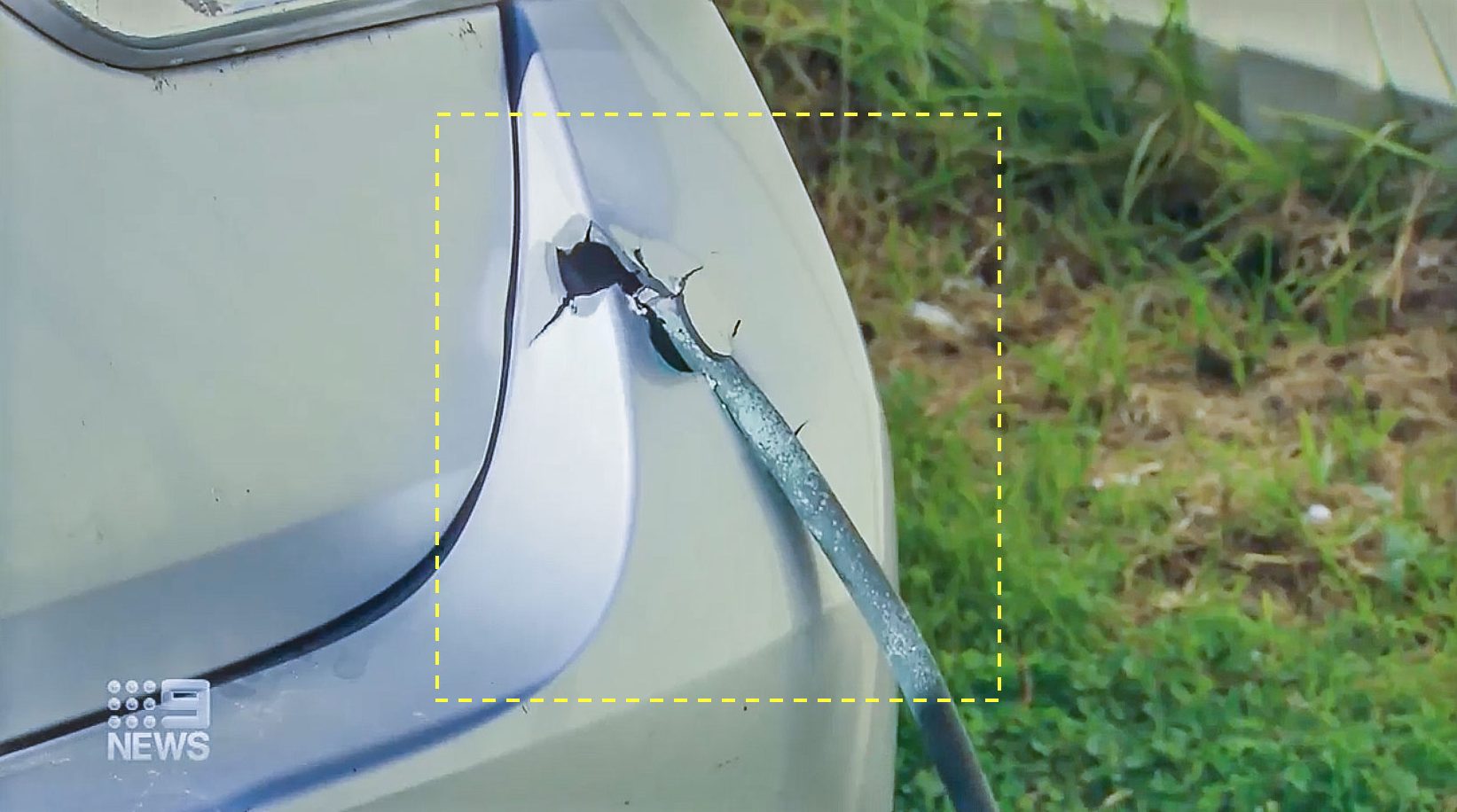
In short: On NSW classified roads, only fencing to Transport for NSW Standard Drawings R0800-15 to R0800-28 is approved within the clear zone. Non-compliant panels shed steel elements on impact, and the liability sits with the specifier, the project manager and the asset owner.
I am not interested in writing about ENCAT’s product range here. What I am interested in is the decision that happens upstream of any fencing procurement, because that is where the outcome is actually set.
The decision is this: when a road safety audit identifies pedestrian fencing as a required treatment, does the project respond by specifying compliant fencing and verifying that what gets installed actually meets the specification? Or does it respond by finding the cheapest product that looks like fencing and assuming that is close enough?
On classified NSW roads, the specification is not ambiguous. Transport for NSW Standard Drawings R0800-15 through R0800-28 define the only fencing type approved for use within the clear zone. Those drawings specify material grades (AS/NZS 3678-G250 and AS/NZS 3679.1-G300), weld standards (AS1554 Part 1), galvanising requirements (AS4680), and dimensional tolerances. They exist because crash testing in 2002, 2003, and 2018 showed that fencing which does not meet those specifications behaves differently on vehicle impact. Panels shed individual steel elements instead of collapsing as a unit, and those elements become projectiles in the impact zone.
That is not an engineering opinion. That is documented crash test behaviour, observed by the Roads and Traffic Authority during the testing programme that produced the standard drawings in the first place.
The cost difference between compliant and non-compliant products is not large. The liability difference, if that fencing is hit by a vehicle and someone is hurt, is enormous, and it sits with the specifier, the project manager, and the asset owner who accepted the installation.
What does Austroads AP-R749-26 mean for road design practitioners?
In short: AP-R749-26 is the foundation for future updates to the Austroads Guide to Traffic Management. Projects designed to today's minimum standard will increasingly look inadequate when they are audited, or when liability is examined.
The Strategic Review of Pedestrian Planning Guidance (AP-R749-26) is a foundation document. Its stated purpose is to provide considered research to inform planning for pedestrian movement, and it provides a foundation for future improvements to guidance that better supports practitioners and agencies. Future updates to the Austroads Guide to Traffic Management will follow from it.
What this means in practice is that the guidance framework is moving. The expectation on designers, planners, and asset owners to demonstrate that foreseeable pedestrian risk has been actively addressed through physical design measures is increasing. Austroads’ research brings together economic analysis, equity perspectives, and a review of current guidance used in practice, with the explicit goal of helping those responsible for planning and providing for the safety of pedestrians address how existing approaches could evolve.
Projects designed to today’s minimum standard will increasingly look inadequate against tomorrow’s guidance. That gap will matter most at two points: when a road safety audit reviews the design, and when something goes wrong and liability is examined.
The decision that needs to change

In short: Treat pedestrian fencing as safety-critical infrastructure: establish the warrant properly, specify the correct standard drawing, and require primary certification documents, not just a supplier's certificate of compliance.
I have walked hundreds of sites in 35 years. I have seen fencing that should never have been installed. I have seen fencing that needed to be there and was not. I have seen compliant fencing replaced with non-compliant product during procurement without the specifier ever knowing. I have seen councils accept whatever turned up on a truck because nobody in the project team knew what to look for in a certificate of compliance.
The Austroads review is a signal from the peak road authority body in Australia that the current approach to pedestrian planning is not sufficient. It is a considered, evidence-based signal produced by people who have spent years reviewing crash data, practitioner practice, and international guidance.
In my industry, we do not need a review to know the problem exists. We can see it installed on roads across the country.
What we need is for the people making specification decisions (road designers, project managers, council engineers, civil contractors accepting product on delivery) to treat pedestrian fencing as the safety-critical infrastructure it is. That means establishing a warrant properly. It means specifying the correct product with the correct standard drawing reference. It means requiring primary certification documentation (steel mill certificates, welding certifications, galvanising certifications), not just a supplier’s certificate of compliance.
It means understanding that a pedestrian killed or seriously injured on infrastructure that was designed, specified, or built to a lower standard than the one available represents a decision that was made earlier in the project, by a person who made the wrong call.
That is not a comfortable thing to say. It is the accurate thing to say.
Frequently asked questions
What is Austroads AP-R749-26?
AP-R749-26 is the Austroads Strategic Review of Pedestrian Planning Guidance, published in January 2026. It reviews the current state of pedestrian planning guidance across Australia and New Zealand, identifies gaps in existing practitioner tools, and provides a foundation for future updates to the Austroads Guide to Traffic Management. It is part of Austroads' long-term Keeping People Safe When Walking research programme.
What fencing is required on NSW classified roads?
On NSW classified roads, only the fencing type described in Transport for NSW Standard Drawings R0800-15 through R0800-28 is approved for use within the clear zone. This is known as RMS Pedestrian Fencing or the Pedestrian Fence. No other fencing type is approved as a substitute, regardless of visual similarity. The requirements are set out in Technical Direction RTD 2019/001 (RMS.19.1272, June 2019).
What happens when non-compliant pedestrian fencing is hit by a vehicle?
Non-compliant fencing that does not meet the material grade, welding, or dimensional requirements of the R0800 drawing series behaves differently under vehicle impact. Instead of collapsing as a unit, it sheds individual steel elements into the impact zone. This is documented crash test behaviour from the Roads and Traffic Authority's testing programme. Compliant fencing is designed to deform as a complete panel to prevent this secondary injury risk.
Who is liable if non-compliant pedestrian fencing causes injury?
Liability for non-compliant pedestrian fencing sits with the specifier who called up the wrong product, the project manager who accepted it, and the asset owner who owns the installation. A certificate of compliance from a supplier does not transfer that liability. Primary certification documentation (steel mill certificates, AS1554 welding certification, AS4680 galvanising certification) is the standard of verification required.
What is the Safe System framework for pedestrians?
Safe System is an evidence-based road safety approach built on the premise that human error is inevitable. The infrastructure must be designed so that errors do not result in death or serious injury. For pedestrians, this means physical design solutions such as separation, compliant crossing facilities and, where warranted, pedestrian fencing, rather than behavioural measures such as signage.
Sources
- Austroads Strategic Review of Pedestrian Planning Guidance (AP-R749-26), January 2026. Available at austroads.gov.au.
- Austroads Keeping People Safe When Walking research programme. Available at austroads.gov.au.
- Transport for NSW Technical Direction RTD 2019/001 (RMS.19.1272), Installation of Pedestrian Fencing on New South Wales Classified Roads, June 2019. Available at standards.transport.nsw.gov.au.
- Transport for NSW Standard Drawings R0800-15 to R0800-28, Roads and Maritime Standard (Road) Drawing Series, Pedestrian Fence. Available at standards.transport.nsw.gov.au.
- AS/NZS 3678, AS/NZS 3679.1, AS1554 Part 1, AS4680:2006. Referenced steel, welding, and galvanising standards.
John Ford is Founder and Director of ENCAT Australia, a manufacturer of RMS-compliant pedestrian fencing based in NSW. ENCAT has been manufacturing to Transport for NSW specification since 1989. John can be contacted through encat.com.au.


