"Sometimes 'standard' products do not address safety or reliability needs for a site.
I am happy to challenge items that are specified in a contract if it means we can deliver something that has better functionality but more importantly a lower cost of ownership.
It means the public will be kept safe and councils can spend their money more efficiently"John Ford - ENCAT Managing Director


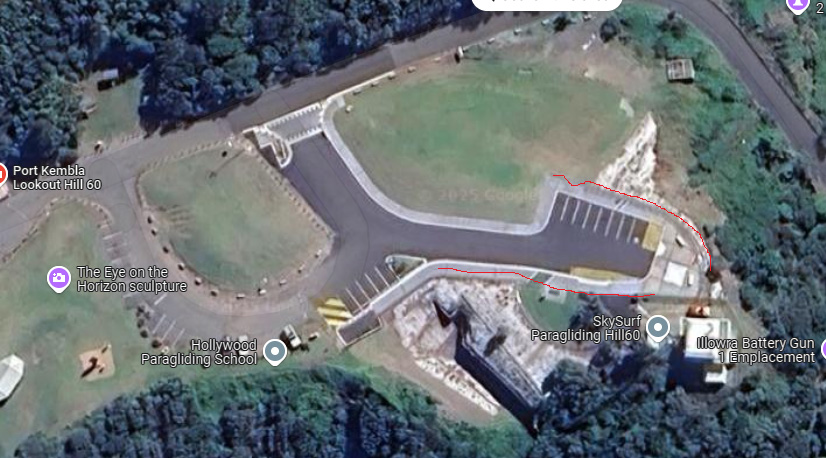
As part of the Hill 60 Top Lookout Carpark upgrade at Port Kembla Headland next to the Marine Rescue Headquarters, ENCAT was engaged by Wollongong City Council to supply and install a custom-designed stainless steel balustrade. Hill 60 is a heritage-listed site in Port Kembla, NSW, with a rich history. It’s known for its Aboriginal heritage, World War II fortifications, and stunning coastal views. The area features underground tunnels and concrete bunkers, remnants of the Illowra Battery, a WWII defensive installation.
The primary objective of the new balustrade installation was to provide a robust fall protection system at the cliff’s edge while preserving the visual amenity of the iconic headland setting.
The coastal location presented a known engineering challenge which was a combination of high wind exposure in a salt-laden environment, where typical balustrade systems are prone to premature failure due to corrosion and fatigue.
Drawing on over three decades of experience in civil and structural infrastructure, ENCAT installed a tailored solution to ensure the durability and performance of the balustrade in such an aggressive setting.
While the project used Grade 316 stainless steel for its superior corrosion resistance and architectural appeal, ENCAT applied critical refinements to the material selection and structural detailing to eliminate risks associated with harmonic balustrade failure.
If you haven’t heard of that term before, let us explain what it is and how we discovered it.
What is harmonic balustrade failure?
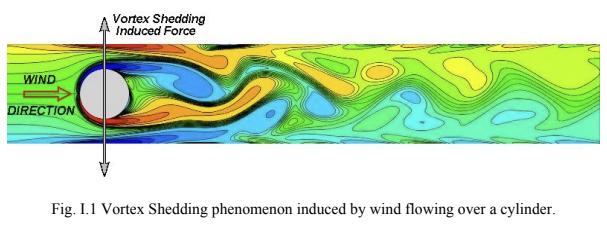
Harmonic balustrade failure is a phenomenon first observed and defined by ENCAT nearly 25 years ago. This failure mode, triggered by vortex shedding, occurs when low-velocity, constant coastal winds generate alternating pressure zones around vertical balusters.
These micro-vibrations are amplified when wind speed aligns with the component’s natural frequency which can lead to fatigue cracking at the welds, particularly in heat-affected zones.
The video was recorded below of vertical balusters vibrating as wind passes the balustrade.
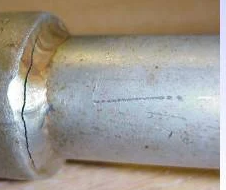
Over time this can result in catastrophic structural failure with components detaching entirely from the system. When this occurs it creates safety hazzards for pedestrians and of course additional replacement costs for the site owner.
Stainless steel balustrade for coastal installation
Unique design
To mitigate this, ENCAT recommended specific changes to the cross-sectional geometry of the balustrade members, successfully altering the natural frequency of the components to avoid resonance lock-in conditions. Fortunately, these recommendations were adopted by council and integrated into the final design, thereby safeguarding the long-term integrity of the structure which will keep children, adults and animals safe if they are walking in the area.
Customised installation
Additionally, all balustrade panels were fabricated as curved assemblies, allowing the system to visually follow the headland’s edge and enhance the site’s natural flow. This manufacturing process is notably complex and required advanced forming techniques to achieve consistent curvature without compromising finish quality. The result was a highly refined installation carried out by ENCAT that both met functional requirements and exceeded architectural expectations.
Just as critical was ENCAT’s ability to do this installation following a no on-site drilling or welding policy throughout the assembly and install process. This approach eliminated contamination risks during erection and ensured that all joints, fixings and finishes met best practice standards for corrosion resistance in coastal applications.
Replacing an existing balustrade
Councils, National Parks, and other government authorities responsible for public infrastructure should consider replacing existing ‘standard’ balustrade systems with an engineered alternative like ENCAT’s custom-designed solution.
Many of the standard balustrades currently installed in coastal, exposed, or high-traffic environments were never designed to withstand the long-term effects of wind-induced vibration, corrosion, or environmental fatigue. These installations often become safety risks within a few years and demand costly ongoing maintenance or full replacement.
ENCAT’s systems, by contrast, are engineered specifically for the location and environmental conditions they’re placed in—whether that’s a cliff-edge lookout, a riverside boardwalk, or a national park trail.
This proactive approach significantly enhances public safety, extends asset life, and reduces the whole-of-life cost to the asset owner. It’s not just about installing a barrier—it’s about investing in infrastructure that performs under pressure and stands the test of time.
Stainless steel balustrade used for car parks or public spaces
Time efficiency
Delivered in just 10 weeks, the project was completed on time, within budget, and to the satisfaction of Wollongong City Council. The Hill 60 balustrade now stands as a showcase of ENCAT’s engineering capability which blends structural reliability, aesthetic finesse and long-term value in one of the most exposed coastal locations in New South Wales.
Custom design vs ‘off the shelf’
This project highlights the critical difference between simply purchasing an off-the-shelf or catalogue balustrade system and engaging a qualified civil engineer to design a fit-for-purpose solution. Catalogue balustrades are often manufactured to generic specifications, with little to no consideration for the environmental forces or site-specific risks they may be exposed to.
Engaging a civil engineer
In contrast, ENCAT’s engineering-led approach ensures that every element from material grade to structural detailing is tailored to the unique conditions of the installation site. At Hill 60, this meant designing a system that not only met the required safety standards but also accounted for wind dynamics, corrosion risk, and coastal fatigue loading.
While this may involve more up-front thinking, it ultimately reduces long-term costs by avoiding premature failure, replacement, or excessive maintenance. The result is a safer, more durable, and more cost-effective asset that performs reliably over decades not just a few years.
Learn more about our civil use balustrade and handrail products
ENCAT regularly works with civil works contractors, local or state government departments or national parks services to design, manufacture and install civil use structures to suit any type of application or existing site. We have been doing this since 1989
Learn more about our range of products