"As a south coast local I had great pleasure helping to complete this project and restore access (with safety) to a much loved location"
John Ford - ENCAT Managing Director



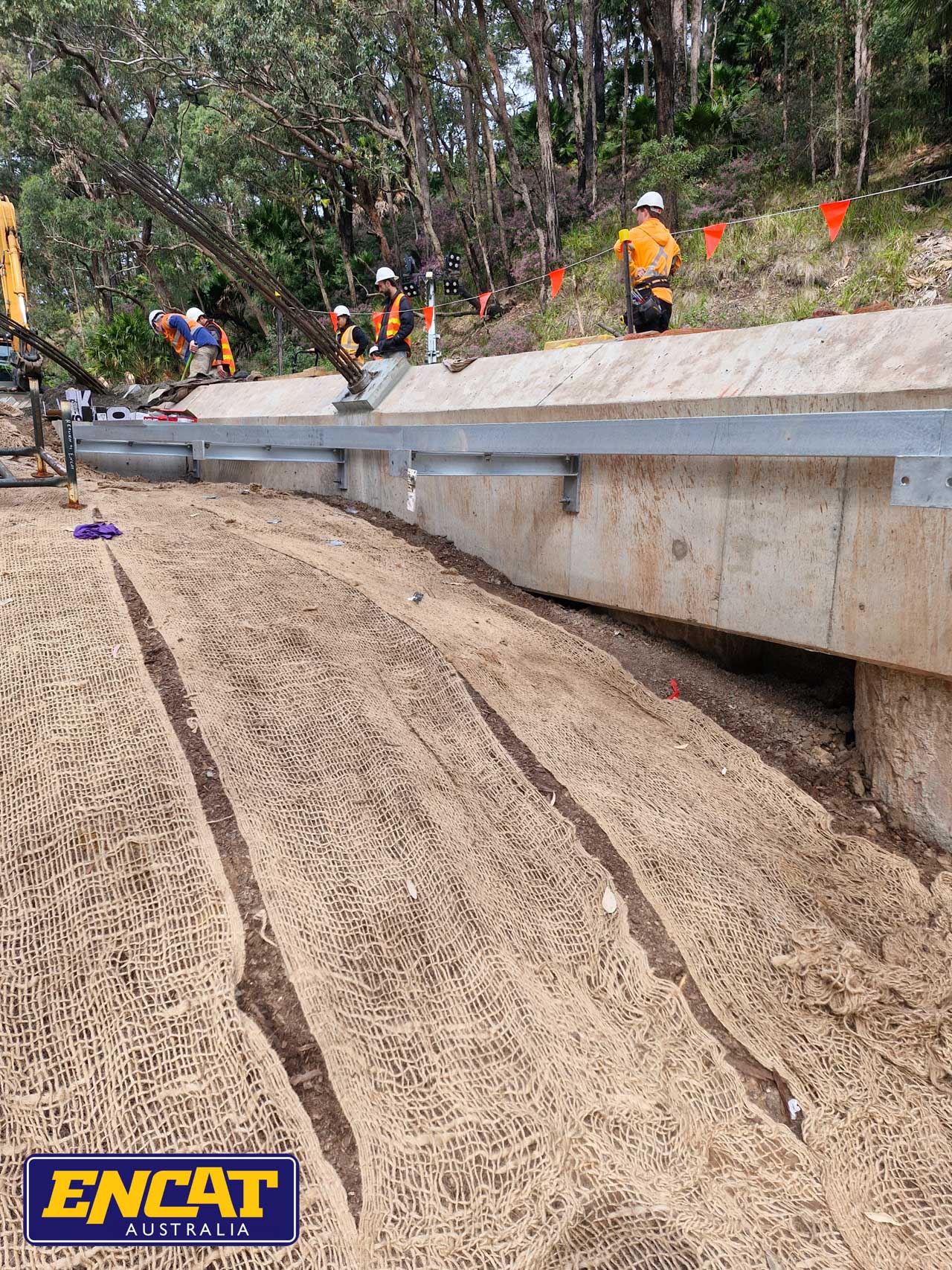
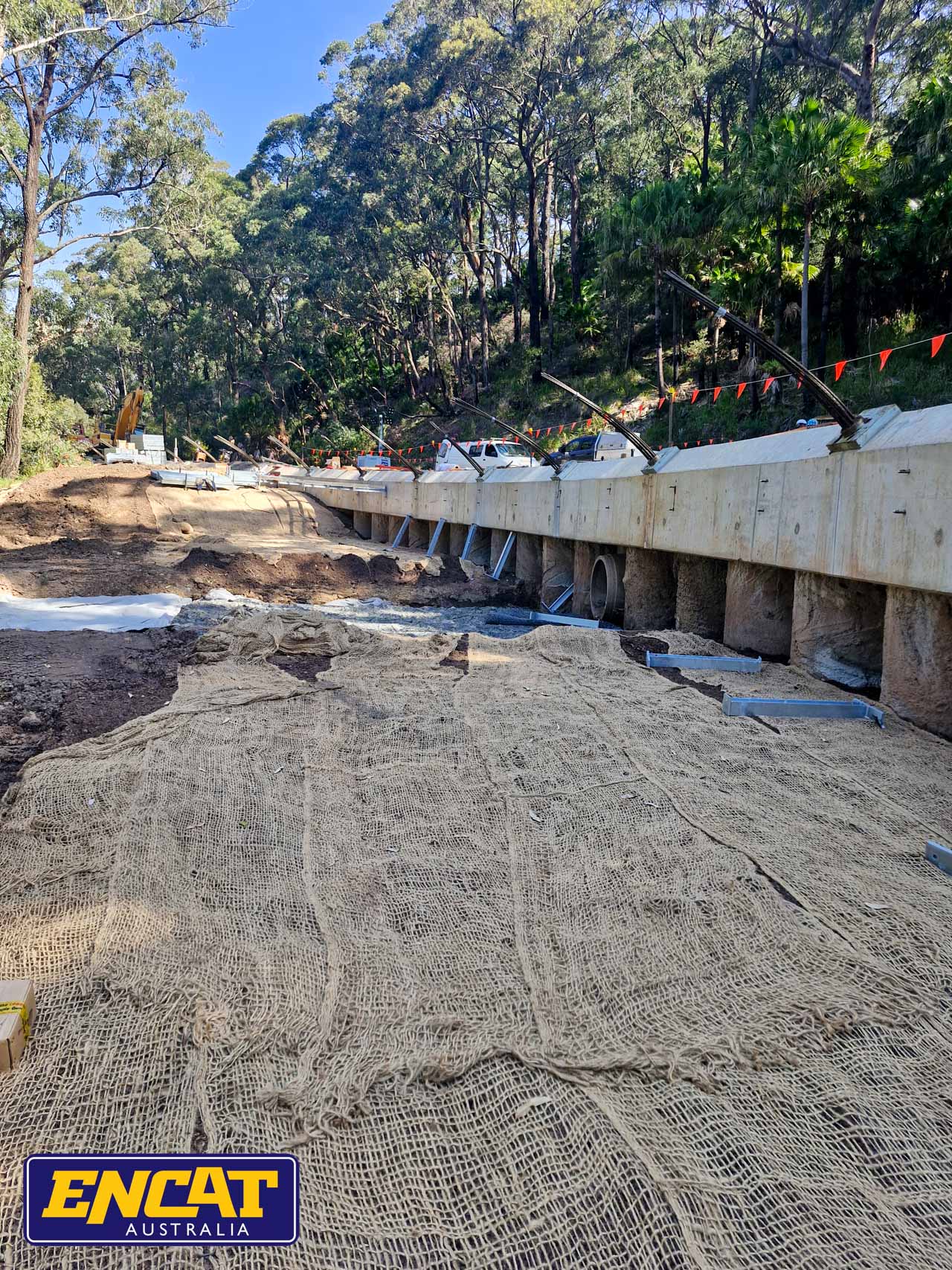
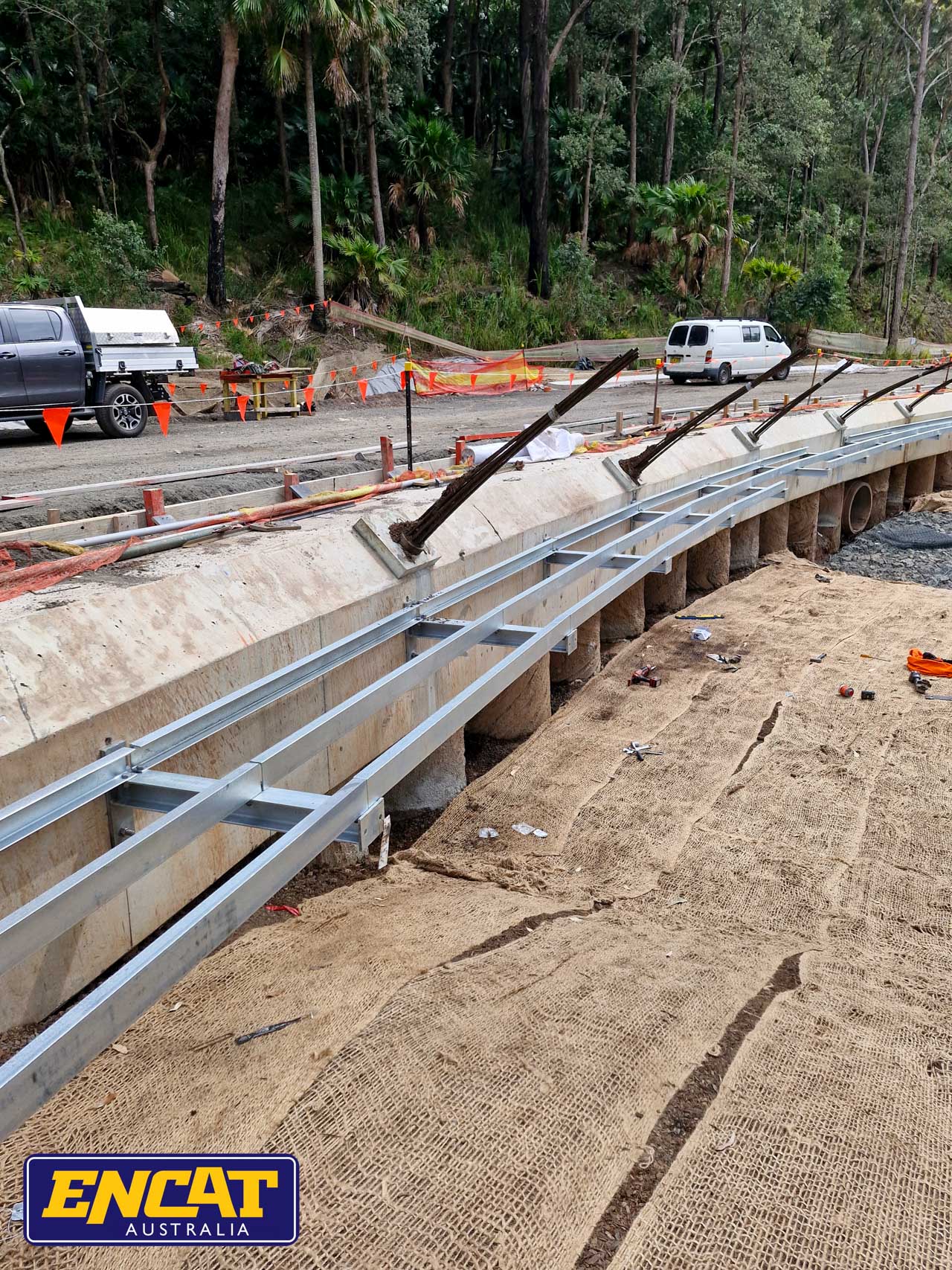
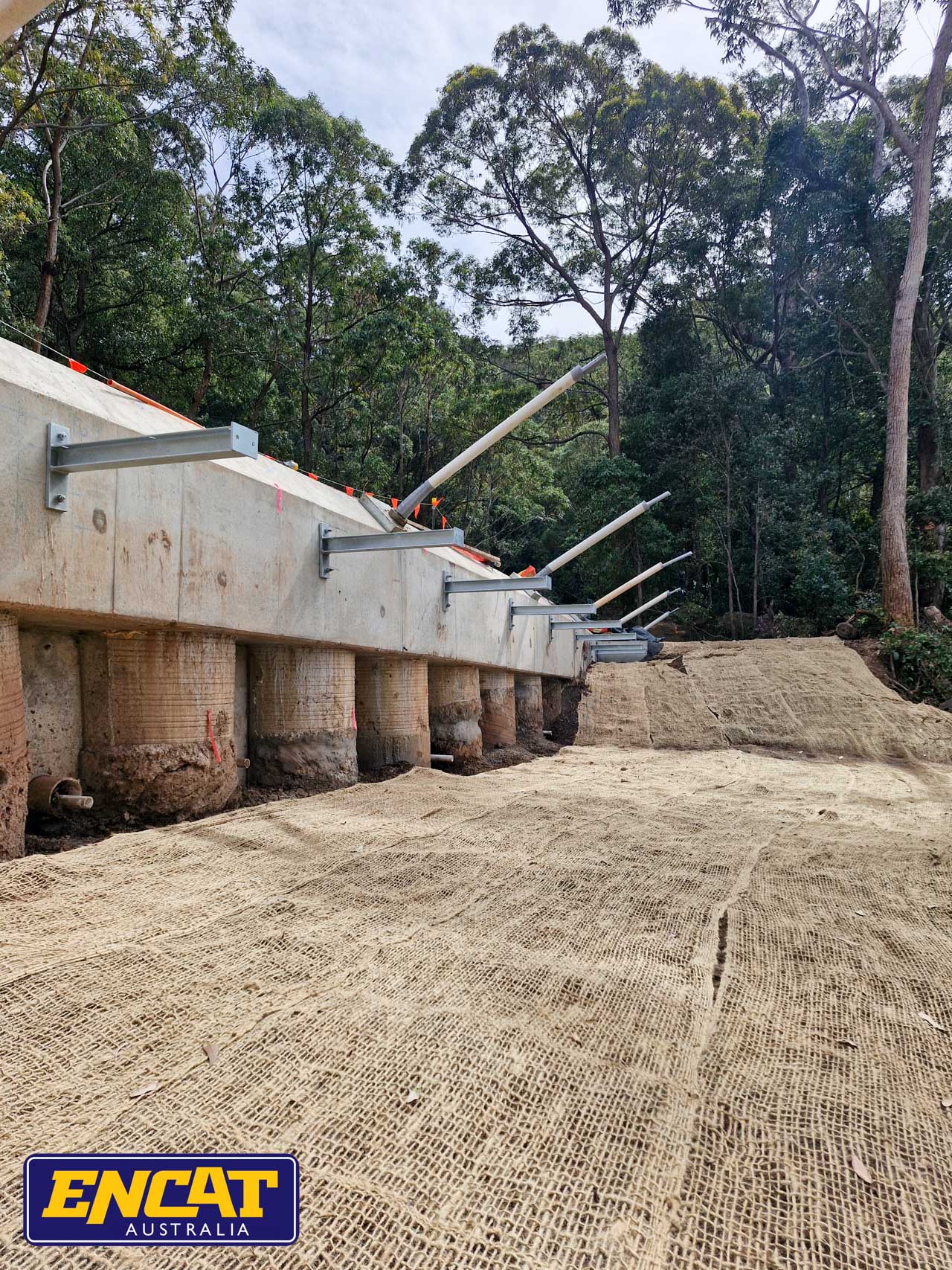
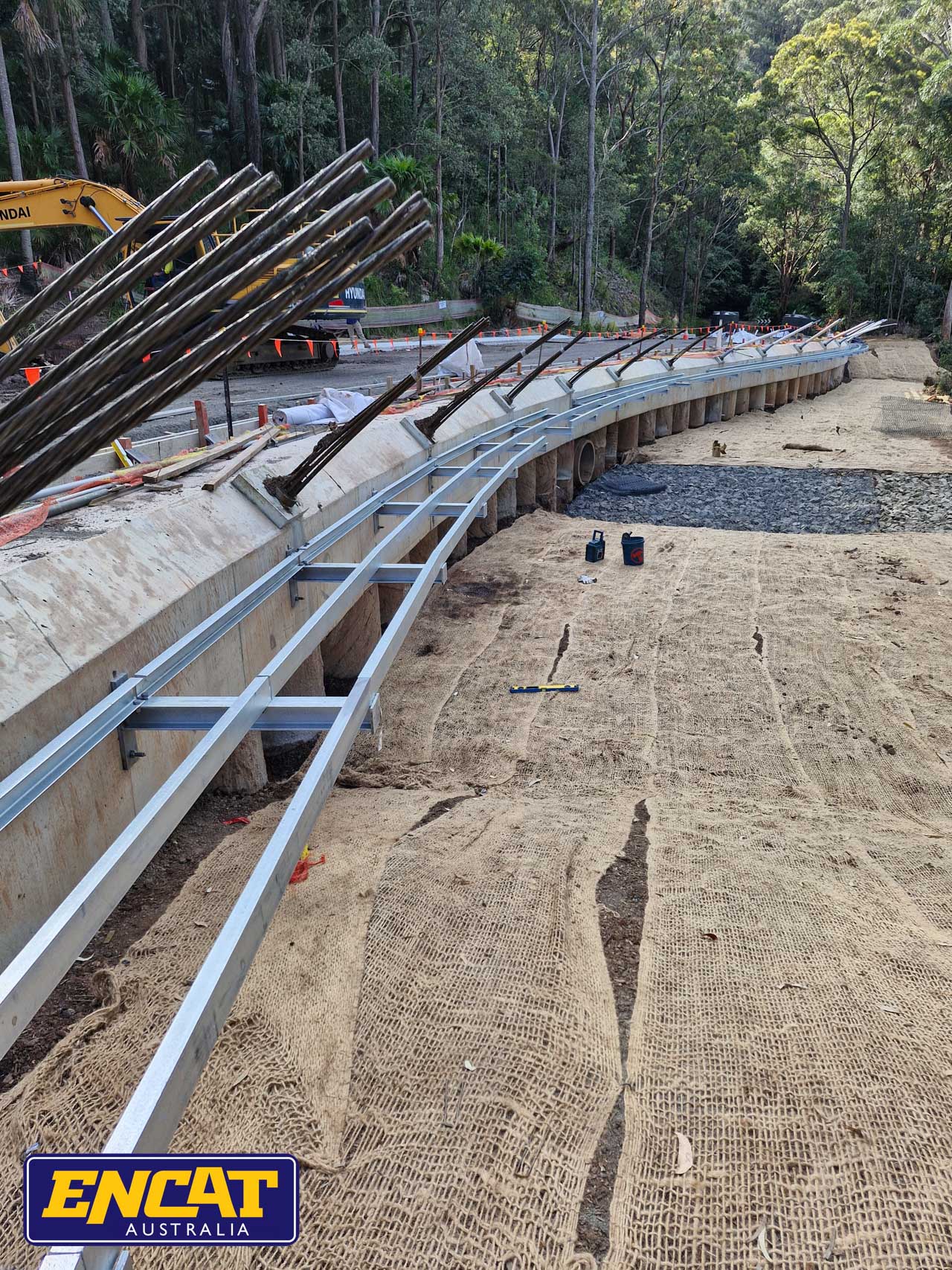
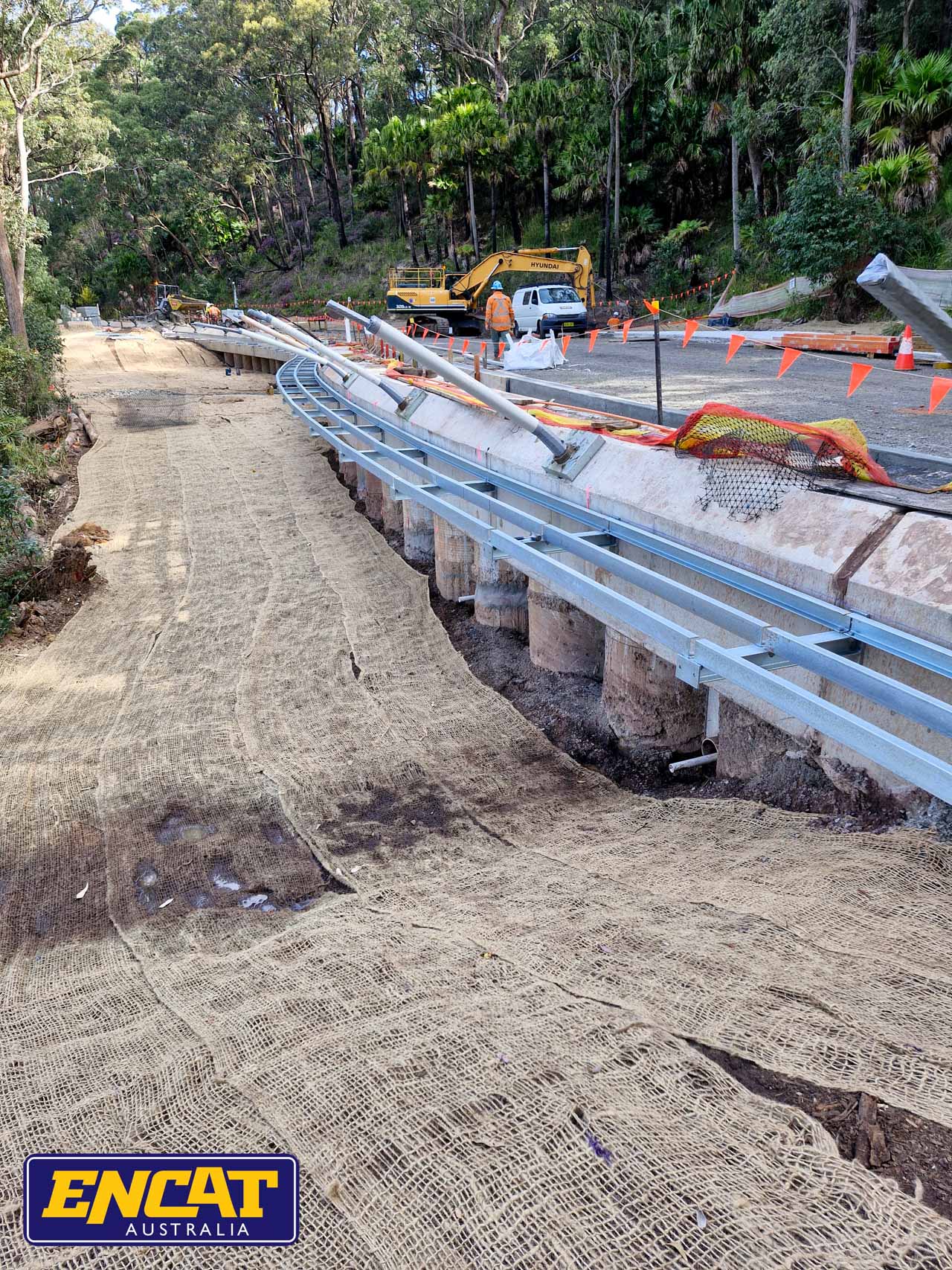
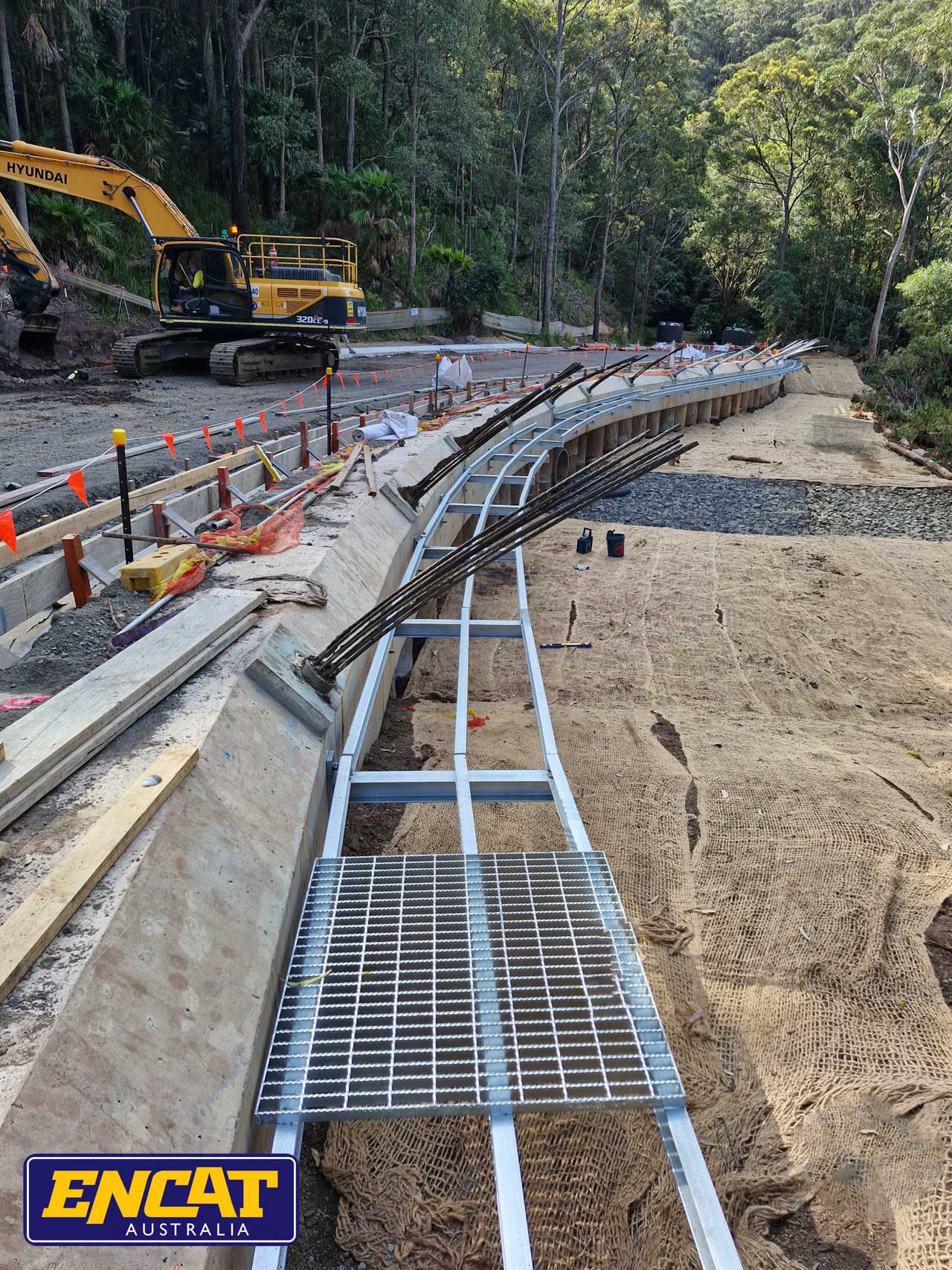
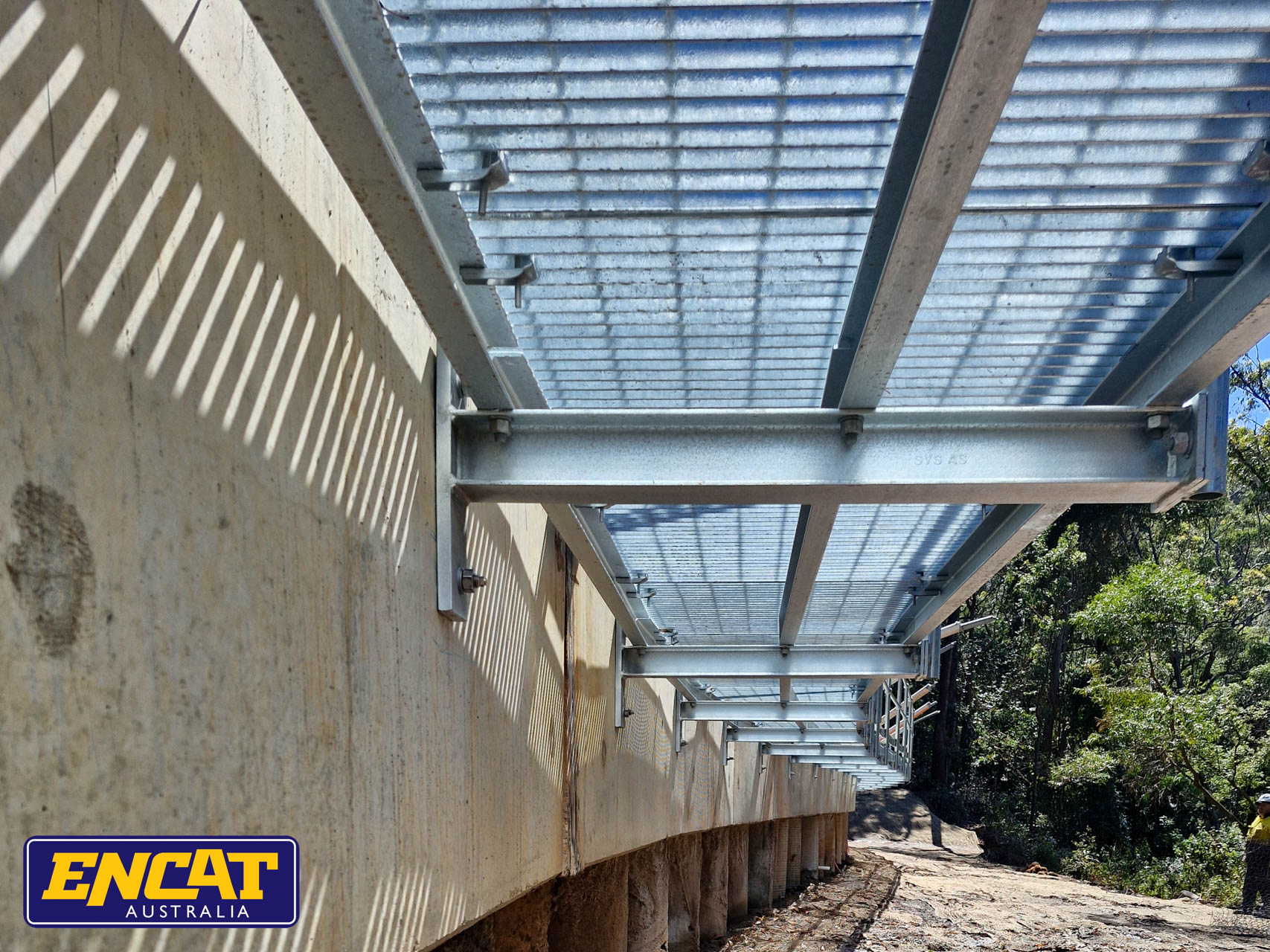
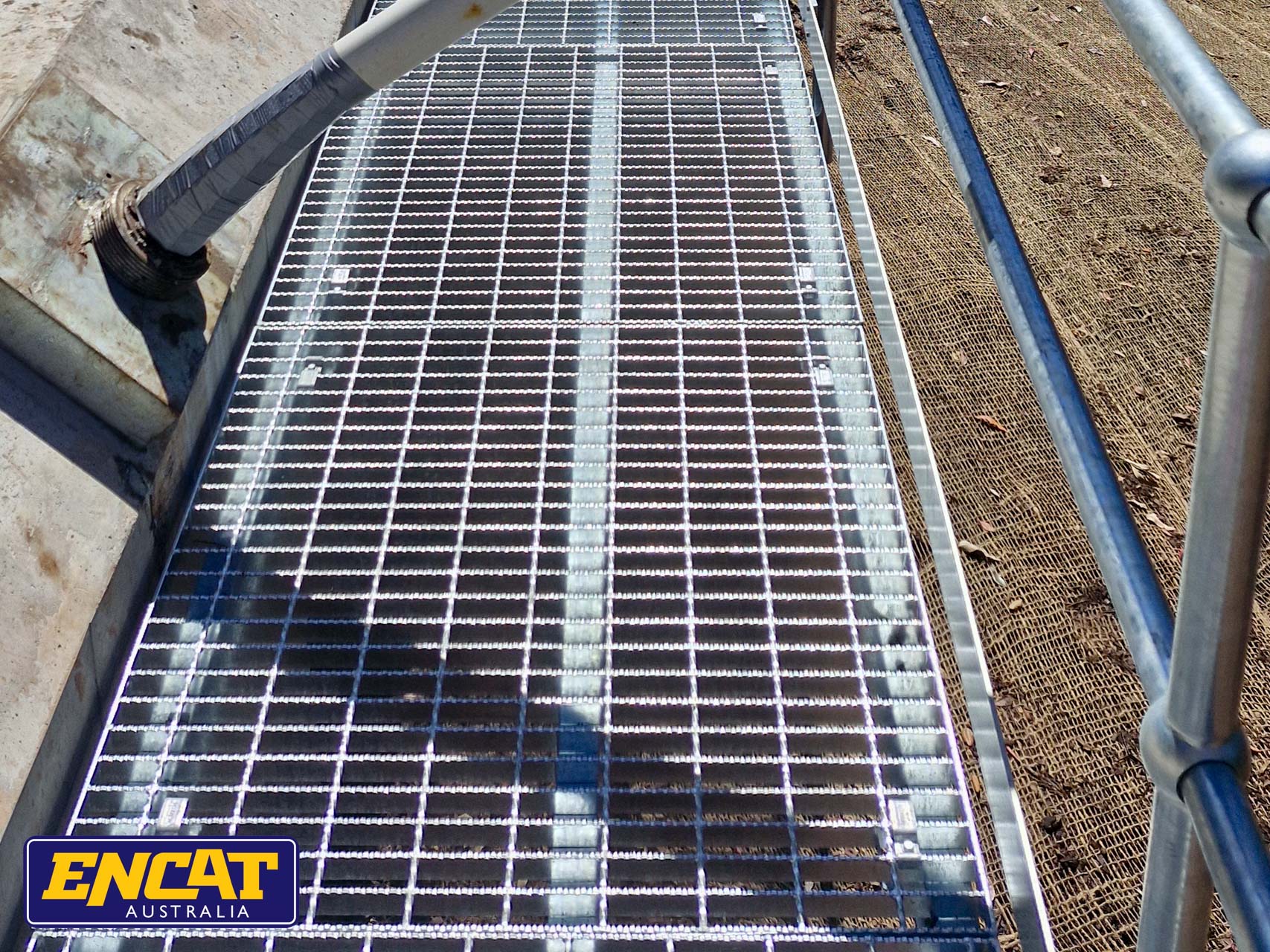
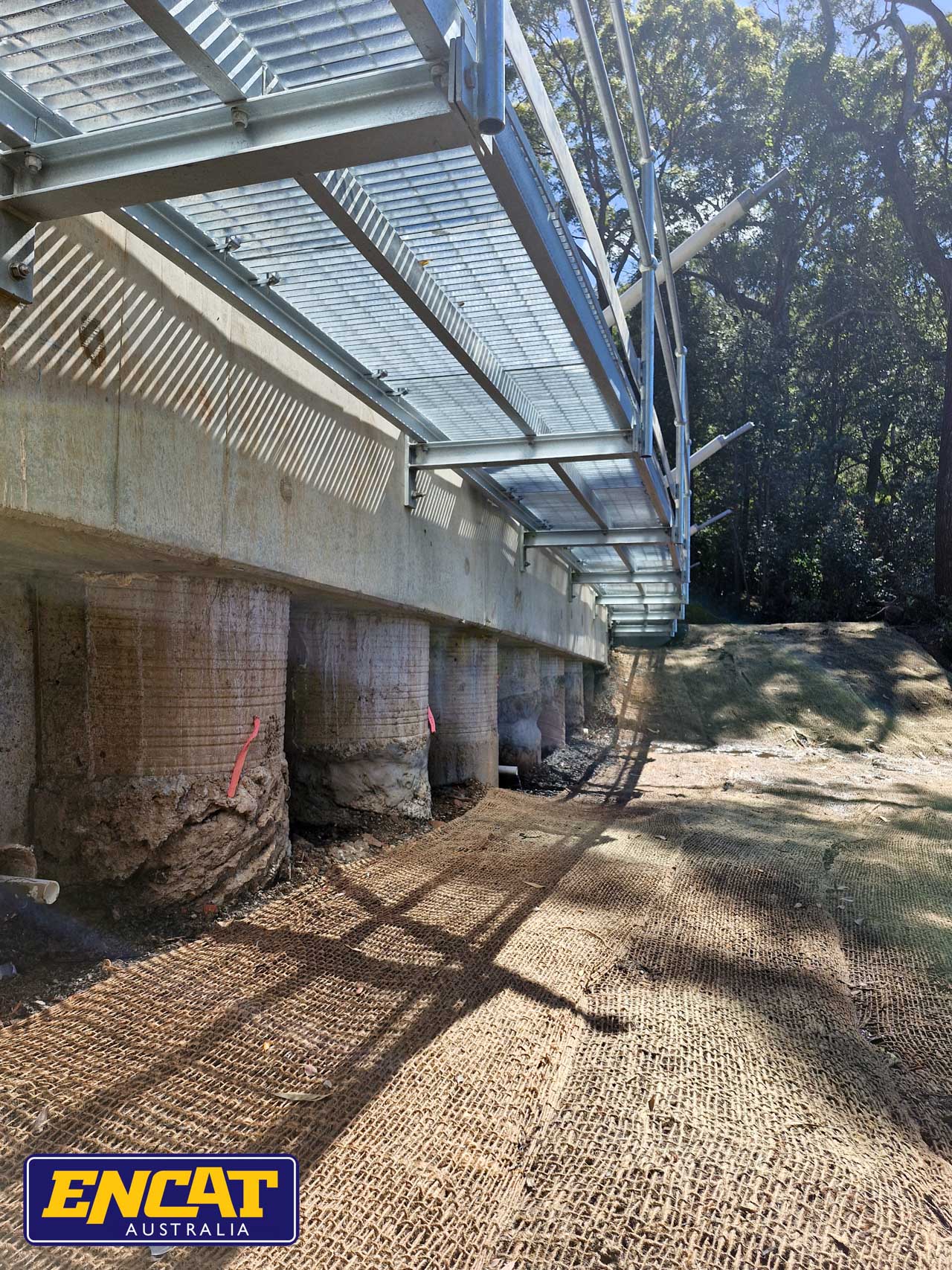
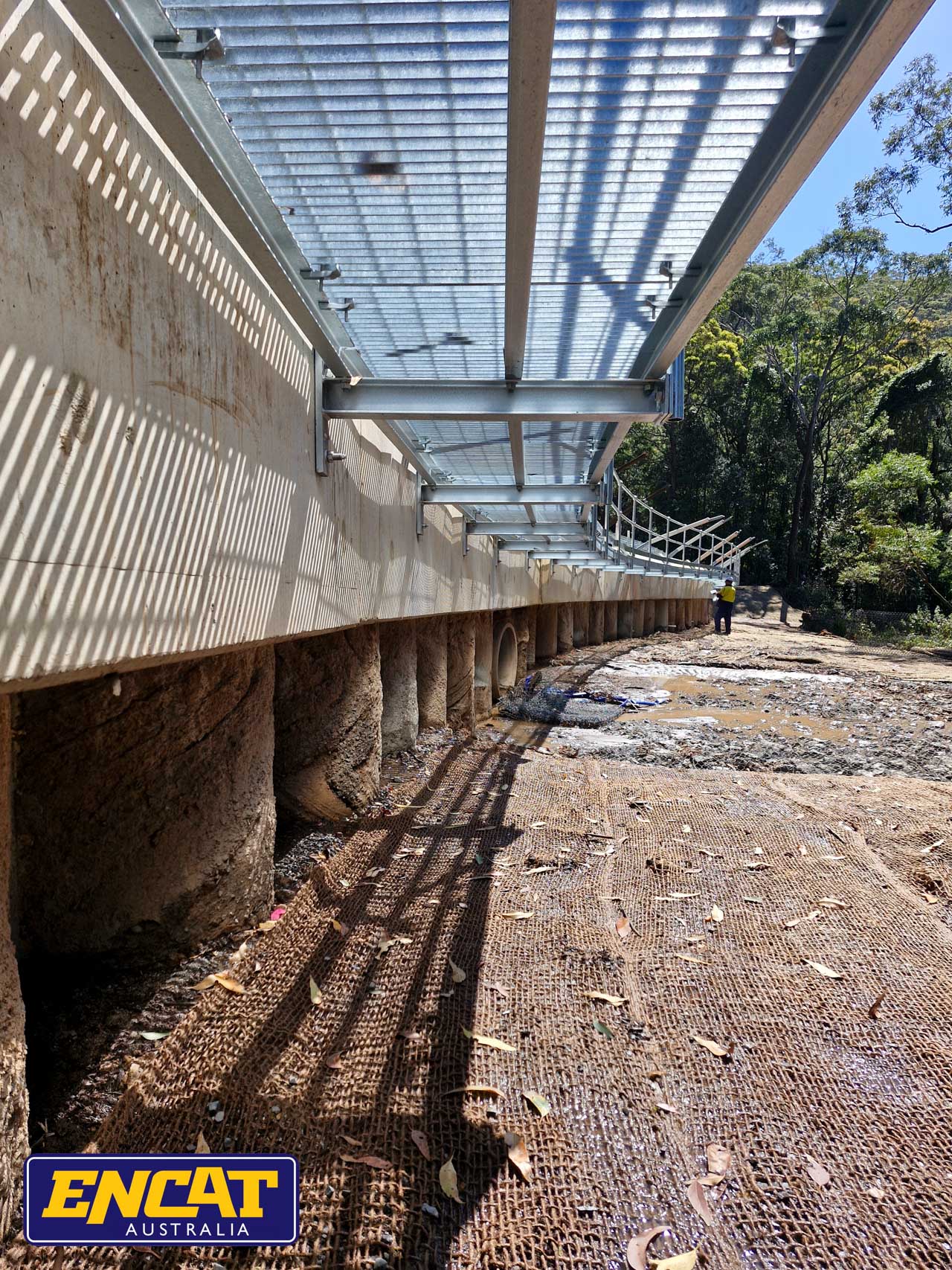
As part of the Garie Road landslide restoration project in the Royal National Park, ENCAT was engaged to supply and install a 60-metre-long cantilevered service platform (also known as a maintenance walkway or inspection platform) to support ongoing monitoring of the newly stabilised slope.
The project, located at 2600 Garie Road, Lilyvale, formed part of critical infrastructure works led by Fulton Hogan for Transport for NSW (TFNSW) after a major landslip caused half the road to collapse and forced its closure.
The new platform, constructed along the upper edge of the reinstated roadway, allows authorised maintenance crews to safely access and inspect the tensioning system of the ring beam cables, which are essential to maintaining slope stability.
While ENCAT did not design the structure itself, we were responsible for the precise fabrication, supply, and installation of all components—delivering the works within an accelerated timeframe to meet the urgent reopening schedule.
To achieve this, ENCAT leveraged its in-house tube laser cutting technology to process the I-beam joists and C-channel bearers, cutting each component to length and laser cut bolt holes with high precision.
This method significantly reduced manufacturing time while improving assembly accuracy and overall build quality. The entire platform structure was fabricated from steel and hot dip galvanised, providing long-term corrosion protection in the harsh coastal bushland environment.
The walking surface utilised a 40mm steel floor mesh (AS40-325MG-2B)—an industrial-grade, slip-resistant material compliant with AS 1657: Fixed platforms, walkways, stairways and ladders – Design, construction and installation.
Engineering for civil, road or maintenance requirements
The project demonstrates ENCAT’s ability to adapt existing client designs and deliver cost-effective, durable, and compliant installations under tight construction schedules.
By pre-manufacturing components and coordinating closely with Fulton Hogan’s site team, ENCAT completed installation within just two weeks once the site was ready thus helping to ensure the timely reopening of Garie Road.
Although not a public access structure, this service platform exemplifies the same engineering principles ENCAT applies to its public-use boardwalks and walkways;
- Precision fabrication
- Structural integrity
- Compliance with relevant Australian Standards.
It’s a strong example of how ENCAT’s expertise in modular steel infrastructure extends beyond community assets into civil, road, and maintenance engineering to deliver safe as well as reliable access solutions for essential infrastructure.
Boardwalks and walking platforms
AS 1657:2018 (Fixed platforms, walkways, stairways and ladders – Design, construction and installation) is the primary Australian Standard governing industrial access systems, including platforms, walkways, and stairs.
It’s distinct from AS 2156 (Walking Tracks), which applies to public/recreational use — AS 1657 applies to industrial, maintenance, and service environment. The main platform and walkway types referenced or defined within AS 1657 and in industry practice:
1. Fixed Platforms
- These are permanent elevated structures that allow access for operation, inspection, or maintenance of equipment.
- Commonly used around machinery, tanks, conveyors, and service areas.
- Must provide safe access and working space for personnel.
- Typically designed with guardrails, toe boards, and non-slip flooring.
- Examples: pump platforms, service decks, inspection platforms, bridge maintenance decks.
2. Walkways
- Linear access paths used to move between platforms or across structures.
- Can be at ground level, elevated, or cantilevered (as in your Garie Road project).
- Must be designed for safe pedestrian travel and load capacity (usually minimum 2.5 kPa live load).
- Often use open-mesh flooring (e.g. AS40-325MG-2B) for drainage and slip resistance.
- Examples: access walkways along bridges, retaining walls, plant rooms, or structural beams.
3. Service or Maintenance Platforms
- Sub-category of fixed platforms providing periodic access for inspection or servicing — not for public use.
- Typically narrow and cantilevered.
- Common in civil, mechanical, and transport infrastructure (e.g. behind retaining walls, under bridges).
- Must comply with AS 1657 requirements for width, guardrail height, fall protection, and access ladders.
4. Catwalks
- Narrow, elevated walkways—often suspended or supported by beams—used for inspection or maintenance.
- Usually between 450 mm and 600 mm wide.
- Used in industrial plants, tunnels, under bridges, and over water treatment tanks.
- Treated as a type of walkway under AS 1657.
5. Access Platforms / Landing Platforms
- Intermediate platforms used to break long climbs or provide safe egress points.
- Typically part of ladder or stair access systems.
- Must include guardrails, non-slip surfaces, and safe clearance from obstructions.
6. Mezzanine Platforms
- Elevated work or storage areas within buildings.
- Designed for personnel and load-bearing capacity.
- Must include compliant guardrails and stairways.
7. Inspection or Observation Platforms
- Small, elevated areas for monitoring or observation tasks.
- Often used near civil infrastructure or environmental monitoring points.
- Require guardrails and compliance with AS 1657 access and safety clearances.
For this project the structure would best be classified as a “fixed service platform” or “maintenance walkway” under AS 1657 definitions being a non-public, cantilevered access platform designed for authorised personnel to inspect and service slope-tension systems safely.
Learn more about our civil use boardwalk products
ENCAT regularly works with civil works contractors, local or state government departments or national parks services to design, manufacture and install civil use structures to suit any type of application or existing site.
We have been doing this since 1989
Learn more about our range of products